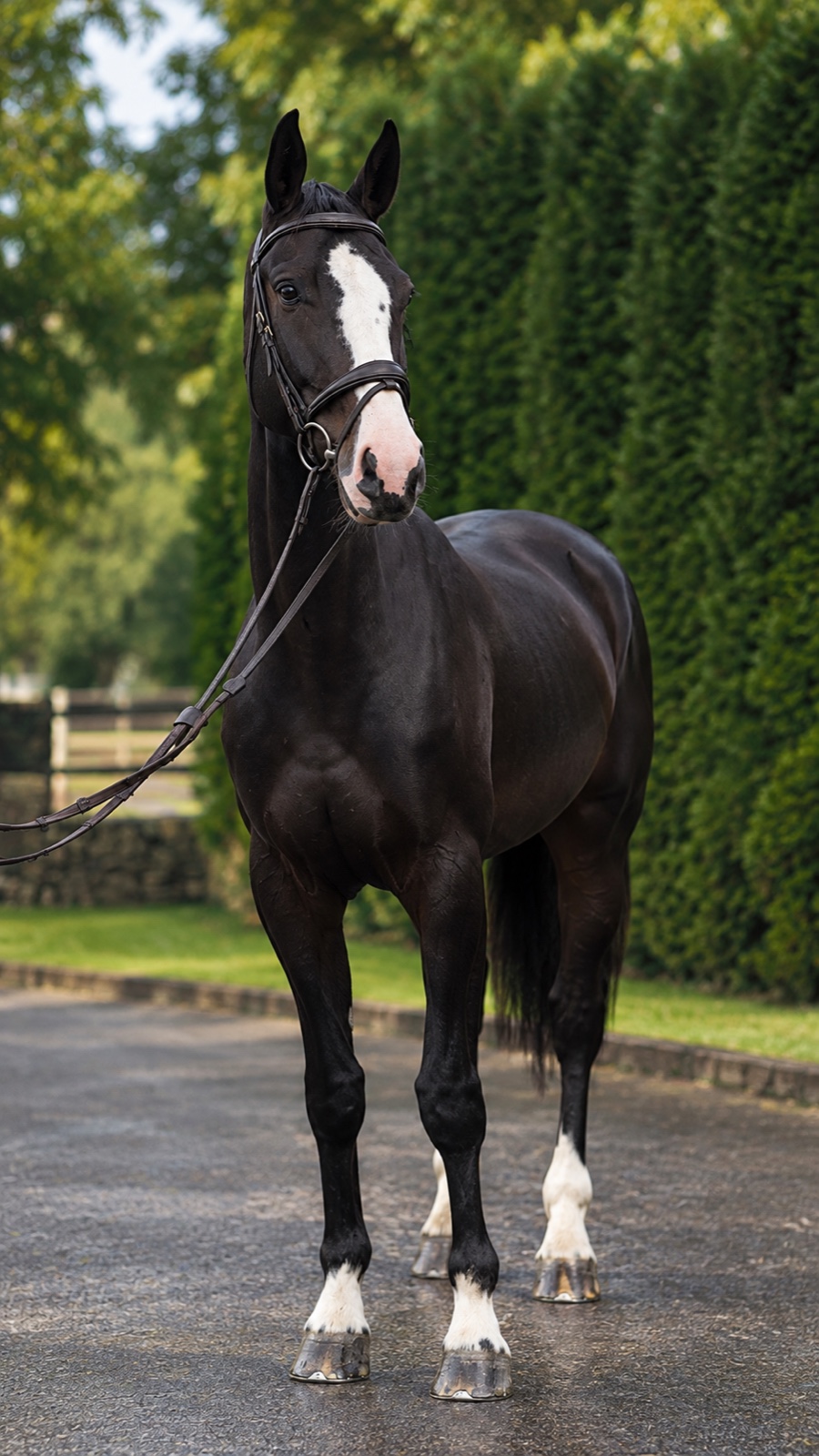
A Latvian Warmblood is one of the few remaining ways to buy a genuine sport horse in Europe without paying a premium for the name on the passport. The breed jumps, the studbook is properly run, and almost nobody outside the Baltics writes about it, which is exactly why the horses are cheaper than their equivalents in the Netherlands or Germany. This guide explains what a Latvian Warmblood actually is, the one studbook detail that catches buyers out, how they jump, what they cost, and what to check before you buy one.
In this guide
What a Latvian Warmblood actually is
The Latvian Warmblood is the national warmblood of Latvia. The studbook goes back about a century, to a period when Latvia was breeding one horse to do everything: pull a cart, work a field and carry a rider on Sunday. That history is the single most important thing to understand about the breed, because it explains the shape of the studbook today.
From the middle of the twentieth century the breeding split. One line stayed heavy and strong. The other was crossed with Hanoverian, Holsteiner, Oldenburg and Thoroughbred blood and selected for riding and sport. The modern sport-type Latvian Warmblood is the product of that second line, and today’s jumping horses are usually out of Latvian mares by imported Dutch, German or Belgian stallions.
The Latvian Warmblood Horse Breeders Association was founded in 2004 and runs the studbook now. It is a small organisation by European standards, which has one consequence that matters to you as a buyer: there is no marketing budget behind these horses, and no auction circuit talking their prices up.
The two sections of the studbook, and why it matters
This is the detail that catches people out, and it is the main reason to read a Latvian passport carefully rather than trusting the advert.
The studbook has two sections. The Latvian Warmblood, usually abbreviated LWB, is the sport type. The Latvian Heavy Warmblood, LHWB, is the heavy type, descended from the draught side of the same breeding programme. Both are correctly described as Latvian Warmbloods in English, and the progeny of one horse can appear in either section.
A heavy-type horse is not a failed sport horse. It is a different animal bred for a different job, and it is not what you want if you intend to jump. If an advert simply says Latvian Warmblood, ask which section the horse is registered in and look at the passport yourself. The abbreviation on the papers tells you immediately.
What they are like to jump
Sport-type Latvian Warmbloods tend to be big-framed and strong, often 168 to 175 cm, with more bone than a modern Dutch horse of the same age. They are generally honest rather than sharp, which makes them straightforward to produce and forgiving of a rider who is still learning the job.
The trade-off is that they usually need more time. A Latvian-bred five-year-old is often less finished than a Dutch five-year-old at the same price, partly because the Baltic young-horse circuit is smaller and the horses simply get fewer starts. That is a real cost in time, and it is also where the value is: you are paying for a horse that has not been produced hard and sold on at the first good result.
Because the modern sires are imported, the jumping blood behind a Latvian horse is often the same blood you would find in a Dutch or Belgian pedigree. It is worth reading the sire line rather than the studbook name.
How they compare with KWPN, Holsteiner and Hanoverian
Against the three big jumping studbooks, a Latvian Warmblood is behind on depth and behind on proof. The KWPN, Holsteiner and Hanoverian studbooks each have decades of performance data, large stallion books and a competitive breeding programme. Latvia has none of that at the same scale.
What it has instead is an absence of a price premium. You are buying the horse in front of you and the pedigree on the paper, not the reputation of the studbook. If you can judge a horse, or you work with someone who can, that is an advantage rather than a risk. If you are buying the name because you need the resale value that comes with it, a Latvian horse is the wrong purchase and you should read our guide to Holsteiner, KWPN and Hanoverian horses instead.
What a Latvian Warmblood costs
For the same age, height and competition record, a Latvian-bred horse will generally sit below a comparable Dutch or German one. The gap is not a quality discount. It is a liquidity discount: fewer buyers look at Latvia, the horses are further from the main markets, and transport is an extra line on the invoice for most of Europe.
That gap is largest at the young end, where nothing has been proved yet and the studbook name does most of the talking. It narrows sharply once a horse has international results, because at that point the record speaks for itself and nobody is buying the passport. If you want the general picture across levels first, see what a showjumper costs.
What to check before you buy
- Which section of the studbook. LWB or LHWB. Read it on the passport, not in the advert.
- The sire line. Most of the jumping blood is imported. The sire tells you more about the horse’s ceiling than the studbook does.
- The passport and the UELN. Check the number against the registry rather than taking the seller’s word for the breeding.
- The competition record. Baltic results are published and verifiable. If a horse is described as jumping a height, there should be a start to match.
- A full vetting with x-rays. Non-negotiable at any price, and more important on a horse you are buying at distance. See our guide to horse vetting and what a 5 stage vetting covers.
Is a Latvian Warmblood right for you?
A Latvian Warmblood suits a buyer who wants more horse than their budget buys in the Netherlands, who is willing to give a young horse time, and who either knows what they are looking at or is working with someone who does. It does not suit a buyer who needs a finished horse next month, or who is counting on the studbook name to hold the resale price.
We see these horses regularly, because we are in the Baltics and we try them ourselves before any of them reach this website. If you want to know what is currently available, our showjumpers for sale page is the place to start, and you are welcome to ask about a specific horse whether or not it is listed.
Leave a Reply