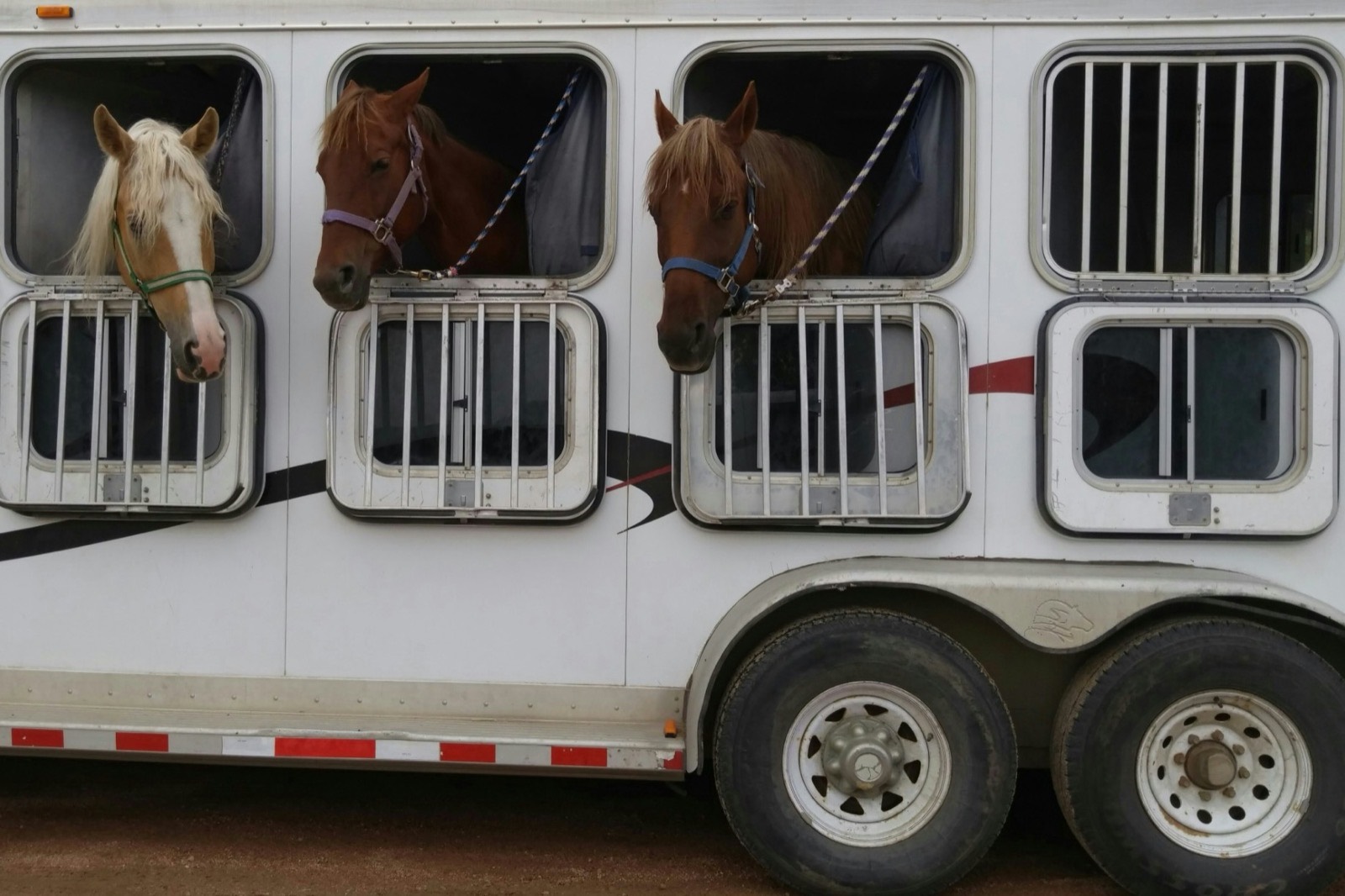
Most horses do not travel by lorry. They travel behind a car, driven by the person who owns them, to a show two hours away and back the same night. That journey is the one nobody writes about, and it is the one where people get the law and the weights wrong.
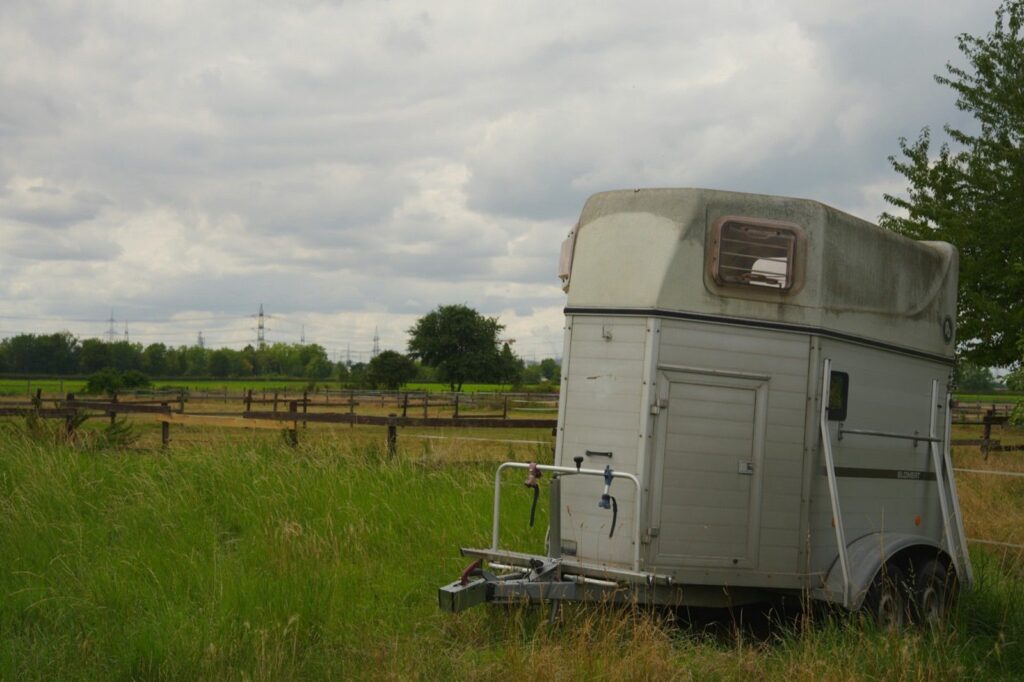
This guide is about moving a horse yourself: the licence you need, the car that will actually do the job, the weights that decide whether your combination is legal, and the point at which the law stops treating you as an owner and starts treating you as a transporter. If you are moving a horse across Europe and paying a professional to do it, our guide to importing a horse to Spain covers that side, including what a lorry costs per kilometre.
In this guide
- The licence, and the part almost everyone gets wrong
- The weights that actually matter
- Which cars really tow a horse trailer
- The trailer itself
- When the law treats you as a transporter
- Papers that travel with the horse
- When to stop and pay someone else
The licence, and the part almost everyone gets wrong
European licence categories are written around the maximum authorised mass of the car and the trailer added together, not what they actually weigh on the day. That one word, maximum, is where people come unstuck.
| Licence | What it allows |
|---|---|
| B | A trailer up to 750 kg behind any car. Or a heavier trailer, as long as car and trailer added together stay at or under 3,500 kg. |
| B96 | The same, but the combination may go up to 4,250 kg. Training, not an exam, in most member states. |
| BE | A trailer up to 3,500 kg, combination up to 7,000 kg. A separate practical test. |
Now put a real outfit against that. A two horse trailer has a maximum authorised mass of roughly 2,600 to 3,500 kg. A car capable of pulling it has a maximum authorised mass of roughly 2,500 to 3,200 kg. Added together that is well over 5,000 kg.
Which means that towing two horses in Europe needs a BE licence. Not B, and not B96. This catches out a great many riders, including people who have been doing it for years, because the trailer is only full twice a month and nobody has ever asked.
One horse in a light single trailer behind a mid sized car can sit inside B. Two horses behind anything that can safely pull them cannot. If you are not sure which you hold, the category is printed on the back of your licence.
The weights that actually matter
Four numbers decide whether an outfit is legal and whether it is pleasant to drive. Three of them are on the car.
- Braked towing capacity. The most your car may legally pull. On the registration document, not in the brochure.
- Gross train weight. Car plus trailer plus everything in both, at their heaviest. This is the hard legal ceiling and it is lower than people assume.
- Noseweight. What the trailer presses down on the towball, usually 75 to 150 kg. The car, the towbar and the trailer each have a limit and the lowest one wins.
- Kerb weight. What the car weighs empty. This is the one that decides how the outfit behaves at speed.
The rule of thumb that keeps a trailer behind you rather than beside you is the 85 percent guideline: the loaded trailer should weigh no more than 85 percent of the tow car kerb weight. It is guidance, not law, and it exists because a trailer heavier than the car in front is what starts a snake. A loaded two horse trailer runs to roughly 2,400 to 2,700 kg, so the car in front of it wants to weigh about 2,300 kg or more. That single number rules out most of what people try first.
Work it out with the horses in it. A 600 kg horse plus a saddle, rugs, water and hay is close to 700 kg by the time it is on the road. Two of those plus a 900 kg trailer is 2,300 kg before you have packed anything.
Which cars really tow a horse trailer
Towing capacity alone does not make a tow car. Kerb weight, wheelbase and a proper low range or a strong automatic matter as much. These are the families that work, with the braked capacities you typically see. Check your own registration document, because the figure moves with engine and specification.
| Type | Typical braked capacity | Verdict |
|---|---|---|
| Full size 4×4: Defender, Discovery, Land Cruiser, Touareg, Grand Cherokee | 3,000 to 3,500 kg | The default right answer. Heavy, long, and built for it. |
| Pickups: Ranger, Hilux, D-Max, Amarok, Navara | 3,000 to 3,500 kg | Excellent capacity, cheap to run. Check the kerb weight, some are lighter than they look. |
| Large vans: Transit, Sprinter, Crafter | 2,000 to 3,500 kg | Sensible if you also haul kit. Watch the gross train weight. |
| Mid SUVs and large estates: XC60, Kodiaq, Passat, Superb | 1,800 to 2,500 kg | Fine for one horse in a light trailer. Marginal for two, and usually illegal on B anyway. |
| Small SUVs and most electric cars | 750 to 1,600 kg | No. Not for horses. |
Two notes from people who do this every week. A diesel with torque low down is still easier on a long hill than a petrol engine with more paper power. And an electric car is a mixed case: the heavy kerb weight genuinely helps stability, but towing cuts range by roughly 40 to 50 percent, which turns a two hour trip into a planning exercise.
If a Defender is on your shortlist, the numbers differ sharply between the classic and the current car, and between engines. Defender Sightings has gone through the towing capacity model by model, which saves reading a brochure that will not tell you the gross train weight.
The trailer itself
A horse trailer spends most of its life parked in weather, which is why the two things that fail are the floor and the brakes, and both fail quietly.
- The floor. Lift the mats. Every time, not once a year. A rotten floor looks fine with mats down.
- Brakes and bearings. Serviced annually. A trailer that has stood all winter will have seized shoes.
- Tyres. Age matters more than tread. Trailer tyres crack and fail from standing, not from mileage. Check the date code.
- Breakaway cable. Attached to a fixed point, not clipped back onto itself.
- Partition and chest bar. A horse that has learned to lean will find the weak weld.
If you move horses only a few times a year, renting is usually better value than owning, and it removes the storage and the servicing. We rent trailers ourselves, which is partly how we know what breaks.
When the law treats you as a transporter
Animal welfare in transport across the EU is governed by Council Regulation (EC) No 1/2005, and the part that surprises people is that it applies to transport in connection with an economic activity, not to commercial haulage alone. Where competing, dealing or professional training sits in that definition is interpreted differently from one member state to the next, which is exactly why it catches people out.
- Under 65 km. The lighter end of the regulation. Fitness to travel and basic welfare still apply.
- Over 65 km, economic activity. You need transporter authorisation. Type 1 covers journeys up to 8 hours.
- Over 8 hours. Type 2 authorisation, a vehicle approval certificate, a navigation system, a certificate of competence for the driver, and a journey log for the trip.
Taking your own horse to a show in your own trailer is normally outside this. Taking a horse you are selling, or a client horse, to that same show may not be. If you move horses regularly and money is involved anywhere in the picture, ask your national competent authority rather than the internet. This guide is orientation, not legal advice.
Papers that travel with the horse
- The passport. In the vehicle, not in the tack room at home. It must be with the horse.
- Vaccinations in date. Influenza above all, and the rules differ between national federations and the FEI.
- Crossing a border. An animal health certificate issued by an official vet and processed through TRACES, with a clinical examination shortly before departure.
For a horse leaving the EU entirely, the paperwork is a different order of problem. Our guide to importing a showjumper from Europe to the USA walks through blood work, quarantine and the flight.
When to stop and pay someone else
There is a point where doing it yourself stops being cheaper. A professional transporter charges roughly 0.70 to 1.50 euro per kilometre for one horse on a shared lorry. Against that, put your fuel, two days of your time, a hotel, the ferry, and the risk of arriving at a vetting with a horse that has stood on a trailer for eleven hours.
Our own rule is simple. Under about four hours, in your own trailer, with a car that is comfortably inside its limits: drive it. Over that, across a border, or with a horse that does not travel well: pay someone whose whole job it is.
Questions people actually ask
What licence do I need to tow a horse trailer?
For one horse in a light trailer, a B licence can be enough if the car and trailer maximum masses added together stay at or under 3,500 kg. For two horses, you will need BE in almost every case.
Can I tow a horse trailer with an SUV?
A full size 4×4 yes, a mid sized SUV only for one horse in a light trailer, and a small SUV no. The deciding number is kerb weight, not the towing figure in the brochure.
How much does a two horse trailer weigh?
Roughly 750 to 1,100 kg empty, and 2,400 to 2,700 kg with two horses and kit aboard.
Do I need transporter authorisation to take my own horse to a show?
Usually not, if there is no economic activity involved. If you are moving a horse that is for sale, or a client horse, the answer may change, and it is decided nationally.
Buying a horse that has to get home?
We sell horses across Europe and we arrange the transport that follows. Tell us where the horse has to end up and we will tell you honestly whether to drive it or ship it.
Leave a Reply