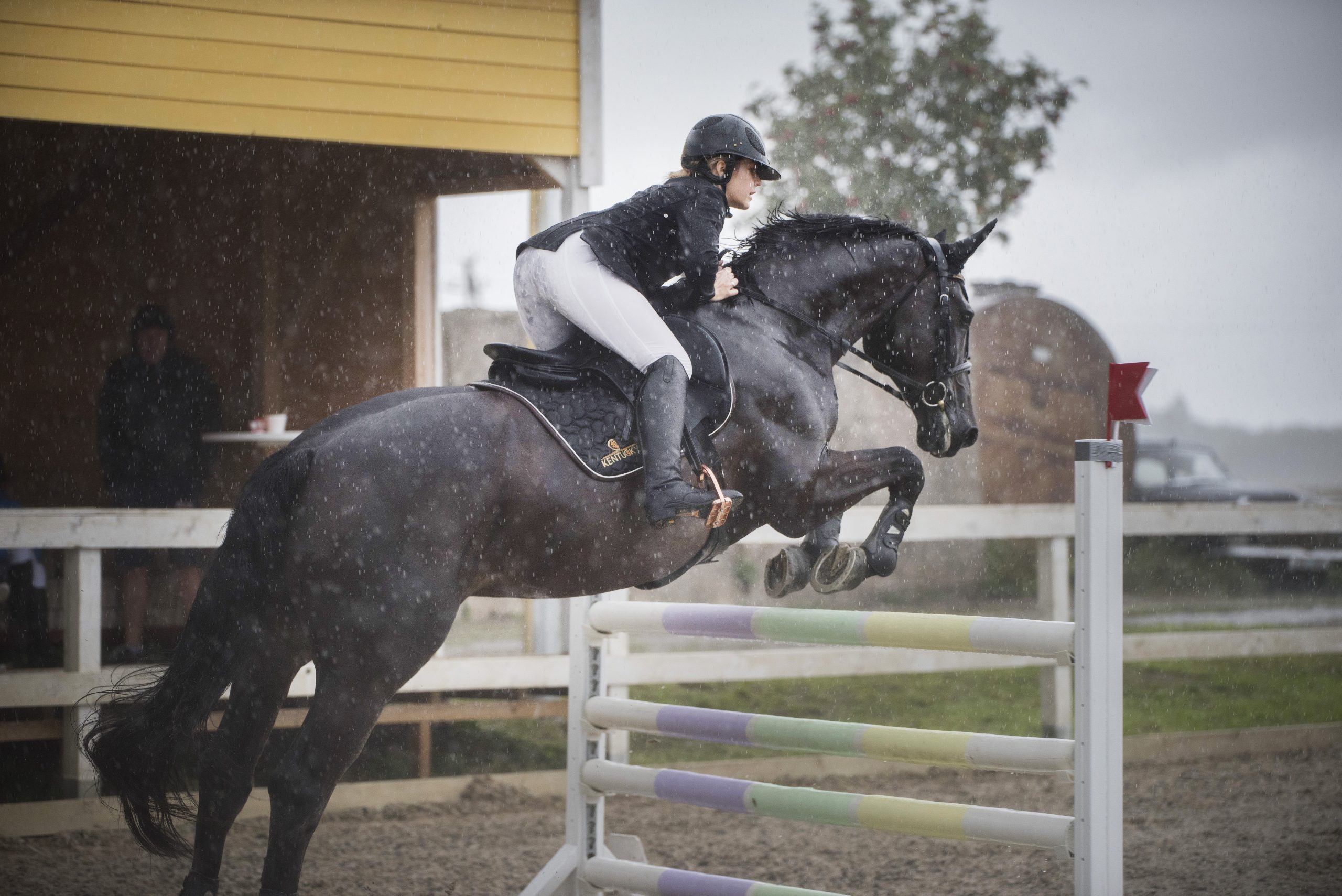
A talented five-year-old is one of the most tempting buys in the sport. The price is lower than a confirmed horse, the upside looks enormous, and there is real romance in producing your own jumper. But a 5 year old showjumper is also one of the easiest horses to get wrong, because you are buying potential rather than a proven record. This guide explains what to look for in a young prospect, what to avoid, and who should and should not be buying one in the first place.
In this guide
- The appeal, and the risk, of a young prospect
- What to look for in a 5 year old showjumper
- What to avoid
- Who should buy a five-year-old?
- Frequently asked questions
- A realistic timeline for producing a young horse
- Bloodlines and the young prospect
- Producing your own versus buying made
- How to try a young horse
- The seller’s program matters
- Red flags in a young horse’s video
- Insuring a young prospect
- What a good five-year-old is worth
The appeal, and the risk, of a young prospect
At five, a horse has usually started its jumping career but has not yet proven where it will end up. That gap between price and potential is exactly why young horses are attractive, and exactly why they are risky. A five-year-old that looks like a future 1.40m horse might top out at 1.20m, develop a soundness issue, or simply turn out to need more horse-power than its rider can supply. You are paying less because you are carrying more of the unknown.
None of that makes a young horse a bad buy. It makes it a buy that rewards experience, patience and a clear head. If you go in understanding that you are backing potential, and you have the means to develop it, a good five-year-old can become the horse of a lifetime for a fraction of what it would cost fully made.
What to look for in a 5 year old showjumper
Temperament and trainability
In a young horse, mind matters even more than it does in a made one. You will be asking this horse to learn, to cope with new venues, and to make mistakes without losing confidence. A genuine, trainable attitude is the single best predictor that a prospect will fulfil its potential. Watch how it handles on the ground, how it reacts to something new, and whether it stays rideable when it is unsure.
Correct basics and natural balance
Look for a horse that moves in balance, accepts a contact without fighting it, and is straightforward in its flatwork for its age. Holes in the basics at five do not always disappear with training. A young horse that already carries itself well, on the flat and to a fence, gives you a foundation to build on rather than a problem to fix.
A good technique and honesty over a fence
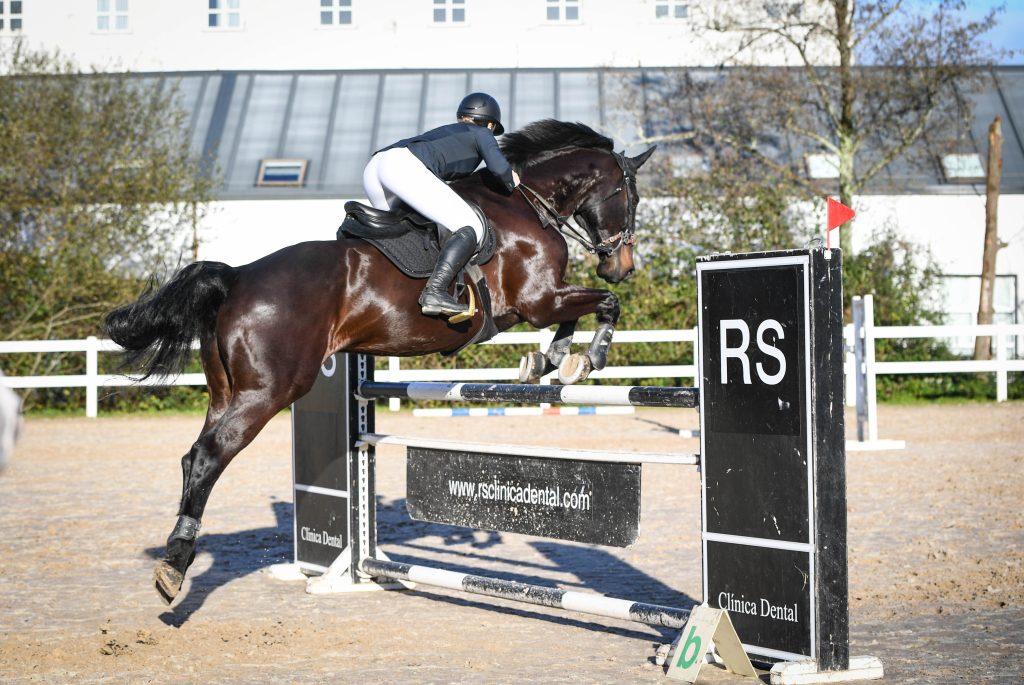
You are not looking for the biggest jump at five, you are looking for a careful, honest one. A young horse that wants to leave the poles up, uses itself well, and tries to be correct even when the distance is wrong is showing you the attitude that produces a real jumper. Recklessness or carelessness at this age rarely improves.
Clean, carefully read radiographs
With a young horse the vetting carries extra weight, because you are partly buying clean potential. Pay particular attention to developmental findings in the hocks and stifles. A thorough pre-purchase exam with radiographs is non-negotiable on a prospect you intend to produce. For background on developmental orthopaedic conditions in young horses, the American Association of Equine Practitioners is a sound reference.
What to avoid
- A horse that has been pushed too fast. A five-year-old already jumping big tracks may be impressive on video and worn out by seven. Producing a young horse slowly protects its future.
- Carelessness dressed up as scope. A horse that jumps high but does not respect the poles is not a careful horse with potential, it is a careless one.
- Holes in the basics. Tension, a horse that hides behind the contact, or one that cannot be adjusted, are training problems you will inherit.
- A temperament you cannot ride. Potential is worthless if you cannot get the horse to the ring calm and confident. Buy the brain you can work with.
Who should buy a five-year-old?
A young prospect suits a rider who can train as well as compete, or one who has professional support in place. If you are an amateur whose goal is to be competing confidently in the next few months, a confirmed horse is usually the better choice, even though it costs more. Our guide on how to choose a showjumper for your level walks through that decision honestly.
It also helps to be realistic about price. A young horse is cheaper to buy, but the time and training it needs are a real cost. Our guide to what a showjumper costs sets the purchase price of a prospect against a confirmed horse so you can compare honestly.
Frequently asked questions
Is a 5 year old showjumper a good first horse?
Usually only if you can train as well as ride, or have professional help. For most amateurs wanting to compete soon, a confirmed older horse is a safer, more enjoyable choice despite the higher price.
How high should a five-year-old be jumping?
Less than you might expect. A correctly produced five-year-old is usually jumping moderate tracks with a careful, honest technique. A horse already pushed to big heights at five is a warning sign, not a selling point.
Why is the vetting so important on a young horse?
Because you are buying potential, and a developmental finding can limit a career before it begins. Clean, carefully interpreted radiographs give you confidence that the potential you are paying for is not already compromised.
A realistic timeline for producing a young horse
Patience is the whole game with a young horse. A correctly produced five-year-old needs time to grow physically and mentally before it is asked serious questions. Expect a year or two of steady, unglamorous work before the horse is competing at the level you bought it to reach. Rushing that timeline is the single most common way a promising prospect is ruined, because the body and the confidence are pushed faster than they can develop.
If you do not have the time, the facilities or the support to give a young horse that runway, it is honest to admit it and buy a more confirmed horse instead. There is no failure in that, only realism.
Bloodlines and the young prospect
Because a five-year-old has not proven itself, the pedigree carries more weight than it would on a made horse. Lines known for carefulness, soundness and rideable temperaments stack the odds in your favour. This does not guarantee anything, plenty of well-bred horses do not make it, but it tilts the probability the right way when you are betting on potential.
Producing your own versus buying made
The honest comparison is not just the purchase price. A young horse costs less to buy but adds one to three years of keep, training and competition fees before it reaches the level a confirmed horse would already jump. Add the risk that it never gets there, and the apparent saving shrinks. For a rider who enjoys producing and has the skill to do it, that trade is worth making. For an amateur who simply wants to compete and enjoy a horse now, a confirmed partner is usually the better value once everything is counted.
How to try a young horse
Trying a youngster is different from trying a made horse. The goal is not to test its ceiling but to feel its basics and its brain. Spend time on the flat first: does it walk off relaxed, accept the contact, and make simple transitions without tension? Over fences, a handful of straightforward jumps tells you more than a big test. Watch how it copes when something is slightly unfamiliar, a different filler or a new line, because that reaction is a window into how it will handle the years of learning ahead. If you possibly can, try it twice on different days, since consistency between visits is one of the most reassuring things a young horse can show you.
The seller’s program matters
With a young horse, how it has been produced is almost as important as the horse itself. A prospect brought along slowly, turned out, and kept happy in its work arrives with a healthy body and a confident mind. One drilled hard to look impressive for sale may carry tension or wear that surfaces later. Ask how the horse is worked, how often it competes, and what the producer’s approach to young horses is. A thoughtful, unhurried program is a strong signal that you are looking at a horse with its future intact.
Red flags in a young horse’s video
- Only short, heavily cut clips. Honest sellers show longer, continuous footage of a young horse working.
- Only big jumps. A video that shows a five-year-old jumping height after height is selling the wrong thing.
- Never shown away from home. A prospect that has only ever been filmed in one quiet arena is an unknown under pressure.
- No flatwork at all. The basics are where a young horse’s quality and trainability show. Their absence is itself information.
Insuring a young prospect
A young horse is a long-term investment of money and time, so cover is worth arranging from the start. Mortality insurance protects the purchase, and major-medical or surgical cover guards against the kind of injury or colic that can happen to any horse. Loss-of-use cover is more limited and more expensive for a young, unproven horse, so read the terms carefully. The point is simply to make sure that an accident does not cost you both the horse and the investment you have made in producing it.
Before you commit to a young horse, read what a vetting of one actually covers. The British Equine Veterinary Association sets out the five stage examination in full, and the WBFSH sire rankings are a quick way to see whether the sire has produced horses that stayed sound into their teens.
What a good five-year-old is worth
Because you are buying potential, prices for young horses vary enormously with bloodlines, talent and how the horse has been produced. A genuine, correctly brought-along five-year-old prospect in Europe commonly sits somewhere between 15,000 and 60,000 euros, with the exceptional ones reaching well beyond that. The temptation is always to stretch for more scope, but remember that you still have to pay to develop whatever you buy, and that a careful, honest prospect at a sensible price is worth more to you than a spectacular one you cannot train on. For a fuller picture of how young horses sit against confirmed ones, see our guide to what a showjumper costs.
Thinking about a young prospect? Tell us your level and your goals and we will only show you young horses with the temperament, basics and clean vetting to fulfil their potential. Start a brief, or browse the horses we currently have available.
A five-year-old is a bet on the future, so buy the brain, the basics and the clean vetting rather than the biggest jump in the video. If you are sourcing from Europe, plan ahead for importing the horse to the USA, and remember that the breed matters less than the individual, as we explain in our breed comparison.
Leave a Reply