Every winter a large part of the European showjumping circuit moves south. From late autumn until April, the horses that spend the summer in the Netherlands, Belgium, Germany and Scandinavia are competing in Andalusia and on the Valencian coast, because the weather allows it and the footing holds. For a buyer, that is the single most useful fact about the Spanish calendar. For three months of the year, Spain is where the horses are.
This guide covers the shows that matter if you are looking for a horse, not just watching one. Two of them are genuine trading circuits where hundreds of horses change hands every season. Two more are worth seeing but are not where you shop.
Months are the usual pattern rather than fixed dates. Always check the current calendar before you book flights.
Sunshine Tour, Vejer de la Frontera
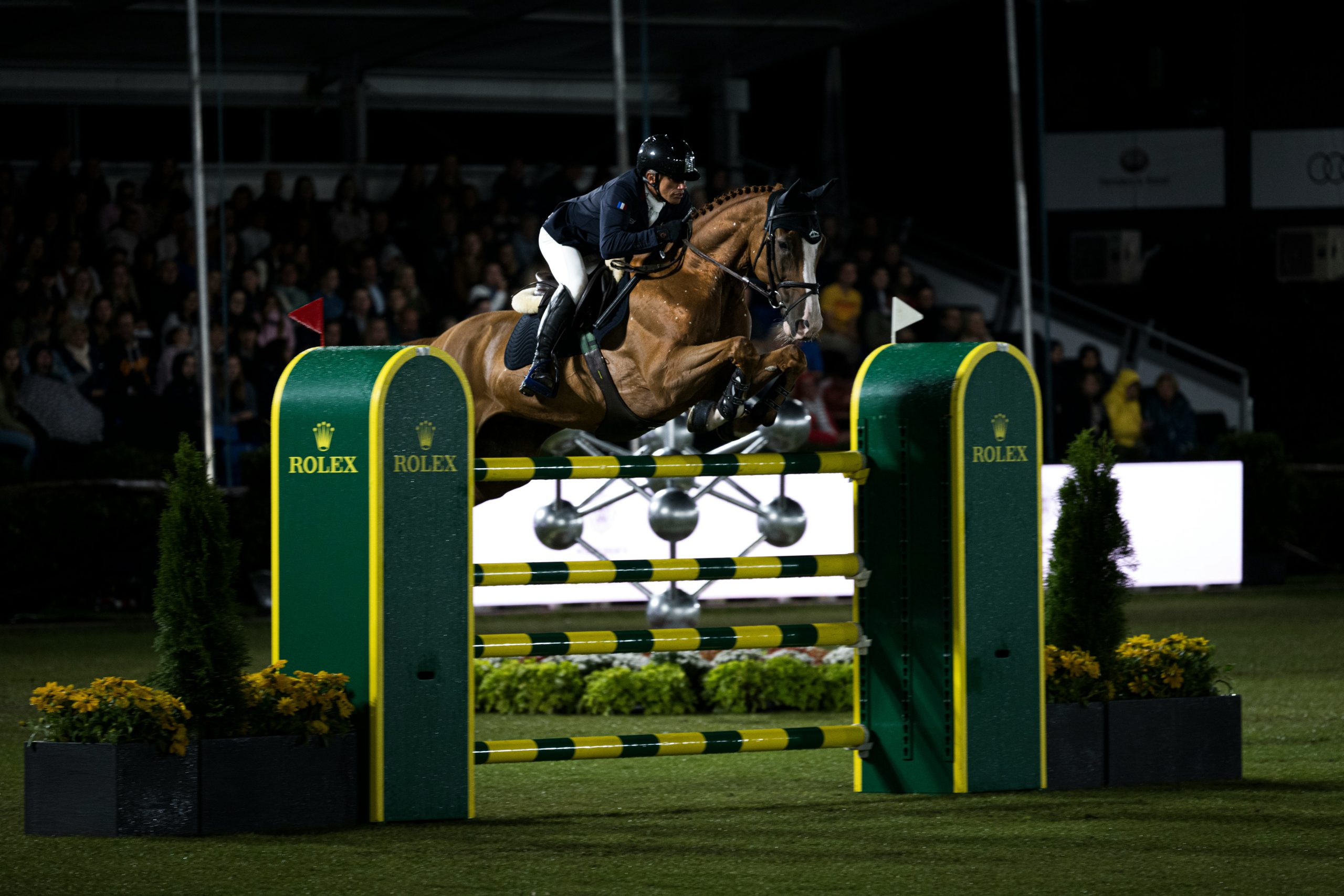
The Andalucía Sunshine Tour is held at Dehesa Montenmedio in Vejer de la Frontera, in the province of Cádiz, and it is the largest winter equestrian event in Europe. The 2026 edition, the thirty-second, opened on 2 February and ran for around ten weeks. The venue has a long list of grass and sand arenas and a removable indoor arena of roughly 5,850 square metres, said to be the biggest of its kind in Europe.
Classes run from young horse divisions up to CSI4*, so a single week contains four-year-olds finding their feet and 1.50 m horses jumping for ranking points. The same organiser runs the Andalucía October Tour at the same venue in the autumn, which is a quieter version of the same thing.
What it means if you are buying. This is the most efficient week of the year for a buyer in southern Europe. Instead of driving to five yards in five days, you sit at one arena and watch fifty horses of the type you want, in competition, on the same footing, against the same clock. Horses are openly for sale, dealers and agents are all there, and a great deal of European trade is done in those ten weeks. The flip side is that everyone knows it, so prices are not soft and the good ones move fast.
Mediterranean Equestrian Tour, Oliva
The Mediterranean Equestrian Tour runs at Oliva Nova, on the coast between Valencia and Alicante. It is organised in blocks: a Spring MET across February to April in several consecutive tours, and an autumn and winter series from late November into December. Classes run from CSI1* to CSI3* with dedicated young horse divisions.
What it means if you are buying. Oliva is the better circuit if you are shopping for a young horse or an amateur horse rather than a 1.50 m ride. The young horse classes are well filled, the atmosphere is less pressured than Vejer, and because the tours run back to back you can watch the same horse on three consecutive weekends and see whether it stays consistent. That is worth more than any video.
Barcelona and Madrid: worth seeing, not for shopping
CSIO Barcelona at the Real Club de Polo and Madrid Horse Week at IFEMA are the two Spanish fixtures most people outside the sport have heard of. Both are excellent events and both are worth going to. Neither is where you find a horse. The fields are small, the horses are at the top of the sport and mostly not for sale, and the format is built for spectators rather than for trade. Go for the sport, and do your buying at Vejer or Oliva.
How to use a show if you are buying
Watch the warm-up, not just the round. The arena shows you what a horse can do. The warm-up shows you what it is like to ride, how much it needs, and how the rider has to prepare it.
Watch the same horse twice. One good round is a good day. Two or three consistent rounds across a fortnight is a horse.
Ask what it is doing next week. A horse that is entered for the following week is in work and sound. A horse that is suddenly available and going home is worth a question.
Do not buy in the arena. Agree nothing on the spot. Arrange to try the horse properly, at home, and vet it independently afterwards.
If you find the horse
Shows are a shop window, not a shop. Once you have seen a horse you like, the process is the same as any other purchase: establish a fair price for what the horse genuinely is, then commission your own vet. Our 2026 price guide by level sets out realistic European brackets, and the pre-purchase exam handbook explains how to read the report. If the horse is standing in Spain and you are not, or the other way round, moving a horse across Europe is cheaper and simpler than most buyers expect.
Questions buyers ask
When is the Sunshine Tour?
The Andalucía Sunshine Tour runs at Dehesa Montenmedio in Vejer de la Frontera from early February for around ten weeks. The 2026 edition began on 2 February. The same venue hosts the Andalucía October Tour in the autumn.
Which Spanish show is best for buying a horse?
Vejer if you want a made horse at 1.30 m and above, because the depth of entries is greater. Oliva if you want a young horse or an amateur horse, because the young horse classes are stronger and the tours run consecutively so you can watch a horse more than once.
Can you buy a horse at a competition in Spain?
Yes, and a great deal of European trade happens at these two circuits between February and April. Agree nothing in the arena. See the horse ridden at home, then commission an independent pre-purchase exam before any money moves.
Do I need to speak Spanish?
No. Both circuits are heavily international and business is done in English, and often in German and Dutch. It helps at the local yards rather than at the shows.
Going to Spain to look for a horse? Tell us your level, your budget and the kind of ride you want, and we will tell you which weeks are worth the flight. Start a brief, or see the horses we currently have.
Most of the good jumping horses in Europe stand in the Netherlands, Belgium and Germany, and most Spanish buyers know it. The question is never whether to look north. It is what happens after you shake hands: which papers you need, what the lorry costs, and what the Spanish authorities expect once the horse is standing in your yard. This guide sets out all three, with real figures rather than “ask a transporter”.
Two things to say at the start, because they remove most of the fear. Inside the European Union there is no customs clearance and no quarantine. A horse moving from Belgium to Spain is not an import in the customs sense at all. It is an intra-Union movement, and the paperwork, while real, is manageable.
The papers you need before the horse leaves
The equine passport. Every horse needs its lifetime identification document, and the microchip number in it has to match the horse. This sounds obvious. It is also the single most common reason a movement is delayed, because passports get lost, are still in the name of a previous owner, or were never updated after a studbook change.
An animal health certificate. This is the part buyers often do not expect. Any horse moved from one EU member state to another must travel with a health certificate, issued on the model EQUI-INTRA-IND for a single animal. It is not optional, and it is not replaced by the passport. The certificate is issued by an official veterinarian in the country of departure and travels through the EU’s TRACES NT system.
A clinical examination within 48 hours of departure. The official vet has to examine the horse within 48 hours before it leaves, or on the last working day before departure. This is what most often dictates the timetable: you cannot book the vet three weeks ahead and then load whenever it suits you.
One useful detail for anyone moving horses regularly. For a registered horse with a valid identification document, the certificate can be issued with 30 days of validity instead of the standard 10, and it allows several movements and a return to the yard of departure. If the horse is going to a show in France on the way south, that matters.
The rules are set out in Regulation (EU) 2016/429, Delegated Regulation (EU) 2020/688 and Implementing Regulation (EU) 2021/403. Your official veterinarian handles the certificate; this guide is orientation, not legal advice.
What the transport actually costs
Most articles on this subject tell you to request a quote. That is true but useless when you are still deciding whether to buy the horse at all. Here is how the number is built, so you can work out your own route.
Specialist equine transporters price by the kilometre. Across Western Europe the working range is 0.70 to 1.50 € per kilometre for a single horse. The low end applies when your horse shares the lorry; the high end, and up to around 1.80 €, applies to an exclusive or premium journey. Add a little for extras: a vet accompanying the journey runs roughly 50 to 150 €, a special diet 10 to 30 €.
Route
Distance
Shared lorry
Exclusive
Brussels to Barcelona
~1,400 km
~1,000 to 1,400 €
~1,800 to 2,100 €
Brussels to Madrid
~1,700 km
~1,200 to 1,700 €
~2,200 to 2,600 €
Amsterdam to Madrid
~1,800 km
~1,300 to 1,800 €
~2,300 to 2,700 €
Worked from published per-kilometre rates. Treat as orientation and confirm with your transporter.
For comparison, and because first-hand numbers are worth more than estimates: we have moved horses from Estonia to Spain, roughly 3,000 km, for 1,200 to 2,000 € on a shared lorry and 2,400 to 3,300 € on an exclusive one. A longer route does not scale in a straight line, because the shared lorries running that corridor are usually full and the cost per horse drops.
Shared or exclusive?
A shared lorry is cheaper and takes two to four days, because it collects and drops other horses on the way. An exclusive journey is direct and roughly twice the price. For a settled, experienced horse, shared transport is normally fine and the money is better spent elsewhere. For a young horse, a nervous traveller, or a horse that has just had a hard vetting week, the direct route earns its cost.
When the horse arrives: you have 30 days
This is the step foreign sellers rarely mention and Spanish buyers often discover late. Under Spanish law, a horse brought in from another EU member state must be entered into the Spanish identification and registration system within 30 days of arrival. There are narrow exceptions, including a stay of under 90 days for competition.
In practice this means contacting a Spanish passport-issuing body, normally a studbook, which checks the foreign passport and carries out the first registration. The identification document is deposited with them for the process. Your horse also needs to be recorded at the holding where it will live.
Change of ownership and the RIIA
Buying the horse and owning it on paper are two different events, and the second one is easy to forget once the horse is home and jumping.
Ownership data in Spain sits in the RIIA, the national equine identification register, fed through the regional authorities. With the older passport format the holder was written into section IV of the document itself. Since the change of format the owner’s details are no longer written in the passport and are transmitted electronically instead. Either way, the registration of the holder is obligatory, and it is done through the issuing body rather than by you filling in a page.
Separately, if the horse is registered with a foreign studbook such as the KWPN, BWP or Zangersheide, the change of owner should also be recorded with that studbook. That is what keeps the pedigree papers useful when you come to sell.
Where it goes wrong
The passport is not ready. Missing, expired, or still showing an owner from two sales ago. Ask to see it, and check the chip, before you agree a price.
The certificate is issued too early. The clinical examination has a 48 hour window. Book the vet and the lorry together, not separately.
Nobody agreed who pays. Transport is normally the buyer’s cost and is arranged after the vetting. Put it in writing with the seller so it is not a surprise at the end.
The 30 days pass unnoticed. The horse arrives, everyone celebrates, and the registration is remembered in month three.
Questions buyers ask
What papers do I need to move a horse to Spain?
The equine passport with a matching microchip, and an animal health certificate on the EQUI-INTRA-IND model issued by an official veterinarian in the country of departure, processed through TRACES. No customs paperwork is needed within the EU.
How much does it cost to transport a horse from the Netherlands to Spain?
Count on roughly 1,300 to 1,800 € on a shared lorry and 2,300 to 2,700 € for an exclusive journey over about 1,800 km, based on typical rates of 0.70 to 1.50 € per kilometre for a single horse.
How long does the journey take?
Two to four days on a shared lorry, because other horses are collected and dropped along the way. An exclusive journey is direct and considerably faster.
Is there quarantine when bringing a horse into Spain from the EU?
No. There is no quarantine and no customs clearance for movements between EU member states. Both apply only to horses arriving from outside the Union.
Do I have to register the horse in Spain?
Yes, within 30 days of arrival, through a Spanish passport-issuing body, unless the stay is short and falls under one of the narrow exceptions such as competing for less than 90 days.
Before you commit to the horse
Transport and paperwork are the easy part. The decision that costs money is the horse itself. Read what jumping horses actually make by level in what does a showjumper cost, and get the pre-purchase exam right before anything is loaded onto a lorry. A horse that vets badly in Belgium is a problem. A horse that vets badly after it is standing in Spain is a much more expensive problem.
If you are an American buyer shopping for a jumper, the first question is always the same: how much does a jumping horse cost? The honest answer has two parts. There is the price of the horse, almost always quoted in euros because the best horses are in Europe, and there is everything it takes to land that horse on your soil and keep it. This guide puts real 2026 numbers on both, in US dollars, so you can budget the whole purchase rather than just the sticker price.
We work on the buyer’s side, so we see what American buyers actually pay, all in. Here is the realistic picture.
Germany, the Netherlands, Belgium and France produce the deepest supply of quality showjumpers in the world, so most serious horses are priced in euros. For a US buyer that means two things. First, the exchange rate matters: a horse advertised at 100,000 euros is roughly 110,000 dollars when the euro sits near 1.10, and that number moves with the currency. Second, the euro price is only the start, because the horse still has to be vetted, flown and quarantined before it reaches you. Treat the euro sticker as the floor, not the final cost.
Showjumper prices by level, in US dollars
Our detailed price guide by level sets the European brackets in euros. Converted to dollars at roughly 1.1 per euro, the 2026 ranges look like this. Treat them as orientation, not a price list, because the individual horse and the time of year move the number.
Type of horse
Typical 2026 range (USD)
Young prospect, 4 to 5, unproven
$17,000 to $66,000+
1.10m to 1.20m amateur ride
$22,000 to $55,000
Confirmed 1.30m amateur horse
$44,000 to $132,000
Competitive 1.40m horse
$110,000 to $385,000
1.45m and Grand Prix
$330,000 to several million
These are purchase prices only. For most amateur buyers, the sweet spot is a confirmed, honest horse in the 1.20m to 1.30m range, where a sound, rideable partner is realistic without reaching for six figures.
What actually drives the price
Two horses of the same height can sit thousands of dollars apart. The price reflects what the horse can do and how reliably it does it, not the height alone. The biggest drivers are the competition record, the age, the scope, and above all the rideability. A safe, scopey horse an amateur can actually ride is worth far more than a more talented horse that needs a professional. Bloodline plays a role too: a fashionable sire raises the asking price whether or not the individual inherited the talent, which is why we always judge the horse before we judge the papers. Our guide to showjumping bloodlines explains where breeding moves the number and where it does not.
Add the import: the real landed cost
This is the part US buyers most often forget. On top of the purchase price, plan for the vetting, export blood work, a transatlantic flight, government quarantine on arrival, and ground transport at both ends. A gelding flying in a shared container typically lands for somewhere around 11,000 to 14,000 dollars on top of the purchase price, and a mare or stallion costs more because of the longer quarantine their sex requires. Our complete import guide breaks the numbers down. The practical takeaway is simple: a horse advertised at 50,000 euros is not a 50,000 dollar horse to you. It is closer to 55,000 dollars at the current rate, plus another 12,000 or so to get it home.
Price by age: young prospect, made horse or schoolmaster
Age changes the price as much as level does. A young prospect of four or five is cheaper because you are buying potential rather than a proven record, and the unknowns are real. A made horse of eight to twelve with a genuine record costs more because the talent is confirmed. A schoolmaster, an older horse that knows its job, is often the best value for a nervous or returning rider even though it will not move up the levels. We compare the trade-offs in our guide to buying a 5-year-old showjumper. For most amateurs buying at a distance, paying more for a confirmed horse is cheaper in the long run than buying potential that does not come good.
The cost after you buy: owning a showjumper in the US
The purchase is a one-time number. Ownership is a monthly one, and over a horse’s life with you it dwarfs the price you paid. In the United States, plan realistically for:
Boarding: often 800 to 2,000 dollars a month for full care, far more in show regions like Wellington.
Farrier: roughly 150 to 350 dollars every five to six weeks for a competition horse.
Routine veterinary and dental care, plus the maintenance an athlete needs.
Insurance: mortality and major medical, usually a few percent of the horse’s value per year.
Training and showing: lessons, entries, hauling and stabling, which add up fast on the circuit.
A horse you can afford to buy but not to keep well is a horse you cannot afford. Set a realistic monthly budget before you set a purchase budget.
How to budget all-in as a US buyer
Work from the total, not the sticker. Add the euro price converted to dollars, the import, the first year of insurance, and a buffer for the inevitable surprises. A useful rule for an amateur is to leave the purchase budget low enough that the all-in landed cost, plus a year of keep, still sits comfortably inside what you can spend. The horse that fits your riding and your wallet at the same time is the one that makes you a better rider rather than a more anxious owner.
Where US buyers overpay, and where the value is
Buyers overpay in two predictable ways: chasing a fashionable pedigree on a horse they will only ride at 1.20m, and buying scope they cannot use. The value, almost always, is in a sound, honest, rideable horse a level or two below the flashiest option, bought from a less fashionable line with a genuine record. That horse costs less to buy, vets better, and keeps you confident. Spending the saved money on a thorough pre-purchase exam and good insurance protects the purchase far better than an extra zero on the price ever will.
How the euro to dollar rate changes your number
Because European horses are priced in euros, the exchange rate quietly sets part of your budget. When the euro sits near 1.10 dollars, a 100,000 euro horse is about 110,000 dollars. If the rate drifts to 1.15, the same horse costs you 5,000 dollars more without the seller changing a thing. You cannot control the currency, but you can plan for it. Build a small buffer into your budget for rate movement between agreeing the price and settling the payment, and do not stretch to the very top of your range on a horse priced in a foreign currency.
A worked example for a US buyer
Say you have set an all-in budget of 90,000 dollars for a confirmed 1.20m amateur horse. A suitable horse is advertised in Germany at 55,000 euros. At a rate near 1.10 that is about 60,500 dollars to buy. Add roughly 12,000 dollars to vet, fly and quarantine a gelding, and you are at about 72,500 dollars landed. That leaves a sensible cushion inside your 90,000 for insurance, the first months of board, and the surprises that always come. The same horse advertised at 70,000 euros would land closer to 89,000 dollars, leaving almost no buffer. Same level, very different fit for your budget. This is exactly why we work back from the all-in number rather than the sticker.
Two things are worth checking yourself before you set a budget. The WBFSH sire rankings show which stallions are actually producing horses at the level you are shopping for, and US Equestrian publishes its membership and show fees in full, which is the part of the first year buyers most often forget.
Frequently asked questions
How much does a jumping horse cost for a beginner or amateur? A confirmed, honest amateur horse at 1.10m to 1.30m typically runs from about 22,000 to 132,000 dollars to buy, before import and keep. Most amateurs are well served in the lower half of that range.
How much does it cost to import the horse to the USA? Plan for roughly 11,000 to 14,000 dollars on top of the purchase price for a gelding, more for a mare or stallion. See our import guide for the breakdown.
Why are European horses cheaper than US horses? Greater supply. Europe produces far more sport horses, so even after import the all-in cost is often lower than buying domestically, with more choice.
What is the cheapest type of showjumper to buy and import? A young or schoolmaster gelding. Geldings skip the long quarantine that mares and stallions need, so they are the cheapest to land.
Want a clear all-in number for your budget? Tell us your level and your spending limit, and we will source horses that fit once the import and keep are factored in, not just the sticker price. Start a brief.
So, how much does a jumping horse cost? For a US buyer, think in three layers: the euro price converted to dollars, the import to get it home, and the monthly cost to keep it well. Budget all three from the start, buy the honest horse rather than the flashy one, and the number on the advert stops being a surprise and becomes a plan.
Search for a jumper and you will quickly start wondering which warmblood to focus on. For an amateur rider, choosing the best showjumper breeds for amateurs is less about finding the most talented studbook and more about finding the temperament you can ride three times a week and still enjoy. This guide looks at the breeds that tend to suit amateur and returning riders best, and explains why, for you, a rideable brain matters more than raw scope.
We help amateur buyers every week, and the pattern is clear. The horses that make amateurs braver are rarely the flashiest. They are the genuine ones. Here is where to look.
Breed is a useful filter, not a guarantee. Each European studbook has a recognisable identity built over decades, and knowing those identities helps you narrow a huge market. But every breed produces saints and difficult horses alike. A well-bred horse with the wrong temperament for you is still the wrong horse, and a modest-looking one with a generous brain can be the partner of a lifetime. Use the breed to build a shortlist, then judge the individual. Our detailed comparison of Holsteiner, KWPN and Hanoverian breeding goes deeper on the big three.
What an amateur actually needs
Before you weigh breeds, be honest about what you need. For most amateurs that is, in order: a trainable, genuine temperament; soundness and a durable build; honesty to a fence, meaning a horse that helps you out of a wrong distance rather than punishing it; and only then scope. A horse that is careful, rideable and forgiving at 1.20m will do more for your confidence than a scopey, sensitive horse you are slightly afraid of. Keep that priority order in mind as you read on, and see our guide to choosing a showjumper for your level for the full picture.
KWPN, the Dutch Warmblood
For many amateurs, the KWPN is the easiest breed to get along with. Dutch breeding has focused hard on rideability alongside ability, producing horses that are athletic and careful but also pleasant and adjustable. The studbook runs one of the most data-driven breeding programmes in the world (the KWPN publishes extensive performance records), so pedigrees are well documented. If you want a modern, scopey horse with a workable temperament, the Dutch lines are a natural first place to look.
Hanoverian
The Hanoverian is athletic, versatile and, crucially for amateurs, often blessed with a level, willing temperament. The studbook is huge and varied, which means you can find Hanoverians bred specifically for amateur-friendly rideability as well as horses with serious Grand Prix engines. For a rider who wants a sensible, all-round partner that can also jump a respectable track, the Hanoverian is a dependable choice.
Holsteiner
The Holsteiner is one of the oldest German warmblood breeds and arguably the most closely associated with pure show jumping. Holsteiners are famous for carefulness and scope, the qualities you want over a fence. The one caution for amateurs is that the line can also be blood-y and sensitive, which top riders prize but which asks more of a tactful rider. A Holsteiner can be a wonderful amateur horse, but choose the individual with temperament firmly in mind.
Belgian Warmblood and Zangersheide
Belgian breeding, including the BWP and Zangersheide studbooks, sits right at the top of the modern sport and produces some of the best Grand Prix horses in the world. That sharpness is a gift in the right hands. For an amateur it can be a lot of horse, so Belgian lines reward a buyer who looks past the famous pedigree to find the genuine, rideable individual rather than the hottest one in the barn.
Selle Francais
The French Selle Francais is bold, brave and full of blood, the classic French jumping horse with engine and courage for bigger tracks. For a confident amateur who wants a horse with heart, the French lines are appealing. For a more nervous rider, the same blood can be more than you want to sit on. As always, the breed sets the type and the individual sets the truth.
Irish Sport Horse
The Irish Sport Horse deserves a place in any amateur conversation, even if it does not top the World Breeding rankings. Bred from a cross of warmblood and Irish Draught, the Irish horse has a long-earned reputation for a sensible head, good bone, durability and a genuine, kind attitude to its work. For an amateur who values a brave, uncomplicated horse over the last inch of scope, an Irish Sport Horse can be exactly the partner that keeps you confident and out hunting for ribbons.
Mare, gelding or stallion for an amateur
Sex is not destiny, but it is worth a thought. Geldings are the default for most amateurs: consistent and uncomplicated. Mares can be exceptional, and many top jumpers are mares, though some are more sensitive in a way a tactful rider enjoys. Stallions are rarely right for an amateur in a busy boarding environment. If you are importing, a gelding is also the cheapest and fastest horse to bring home, since it skips the long quarantine that mares and stallions require.
Temperament over breed, the real rule
If you remember one thing, make it this: for an amateur, temperament outranks breed every time. Ask any professional what matters most in an amateur’s horse and the answer is rarely scope or bloodlines. It is the brain. A trainable, genuine horse makes schooling, warming up at a noisy show and recovering from a green mistake all easier. The same horse with a difficult mind makes every part of ownership harder. Breed narrows the search. Temperament closes it. Our guide to showjumping bloodlines can help you read which lines tend to pass on the rideable brain you want.
How to use breed in your search
Treat breed as the first filter and the last tiebreaker. Start with the breeds that tend to suit your temperament and goals, lean on the bloodlines to predict the ride, and then judge each horse in person on its honesty, soundness and trainability. If you cannot travel to Europe to try every horse, this is exactly where a buyer-side agent earns their keep, sitting on the horse for you and telling you the truth about its brain before you ever get on a plane.
Other breeds worth a look
The big names are not the only options. The Oldenburg and Westphalian studbooks, both German, produce plenty of rideable, athletic jumpers and overlap heavily with Hanoverian and Holsteiner breeding. The Scandinavian studbooks, Danish Warmblood and Swedish Warmblood, have risen fast in the sport and often pair scope with a genuinely workable temperament that suits amateurs well. None of these should be ruled out on the badge alone. The studbook narrows the search, and the individual horse settles it.
Common mistakes amateurs make with breed
Two mistakes come up again and again. The first is buying a breed or a fashionable line for its reputation rather than for the horse in front of you, then discovering the individual did not inherit the calm, careful brain the line is known for. The second is dismissing a wonderful, honest horse because its breeding is unfamiliar or unfashionable. Plenty of brave, sound, sensible jumpers come from lines that never trend. Let the breed guide your shortlist, but never let it override what you feel when you actually ride the horse.
The studbooks describe their own breeding goals in plain language, and it is worth reading them in the original rather than in a sales advert. The Hanoverian Verband and the Holsteiner Verband both publish what they select for, temperament included.
Frequently asked questions
What is the best horse breed for an amateur show jumper? There is no single answer, but KWPN, Hanoverian and Irish Sport Horse are all known for amateur-friendly, rideable temperaments. The right breed is the one whose typical brain suits how you ride.
Are warmbloods good for amateur riders? Yes. Most top jumpers are warmbloods, and many lines are specifically bred for rideability. Just prioritise temperament over scope when you choose the individual.
Is an Irish Sport Horse a good amateur jumper? Often, yes. Irish Sport Horses are valued for a sensible head, durability and a genuine attitude, which suits amateurs who want a brave, uncomplicated partner.
Does breed affect the price? It can. Fashionable lines carry a premium whether or not the individual inherited the talent, so judge the horse before you judge the papers. See our price guide.
Not sure which breed fits you? Tell us your level, your goals and the kind of ride you enjoy, and we will source horses built to match your temperament, not just to impress. Start a brief.
The best showjumper breed for an amateur is the one whose typical temperament fits the rider you actually are. Use the studbooks to narrow your search, lean on bloodlines to predict the ride, and then let temperament make the final call. Do that, and you will not just buy a well-bred horse. You will buy the one that makes you braver every time you ride it.
Europe is the marketplace for the sport, and most serious showjumpers in North America were either bred there or sourced there. Learning how to buy a horse in Europe is really about learning a process: how to find the right horses, try them well, vet them properly and bring them home, all from thousands of miles away. This guide walks through it step by step, written from the buyer’s side, so you arrive in the market prepared rather than hopeful.
The buyers who do this well are not the ones with the biggest budget. They are the ones who understand the order of operations before they fall in love with a horse. Here is that order.
The depth of supply is the simple reason. Germany, the Netherlands, Belgium and France produce more quality sport horses than anywhere else, with established studbooks, professional producers and a constant flow of horses at every level and price. For an American buyer, that means more choice and, often, better value than the domestic market, even after you add the cost of importing. The trade-off is distance, and distance is exactly what this process is designed to manage.
Step 1: Define your brief before you look
The most expensive mistake in buying is shopping without a clear brief. Before you look at a single advert, write down the level you ride consistently, your goal for the next two to three years, your honest budget including the vetting and import, and your timeline. Be realistic about how much horse you can ride. Our guide to choosing a showjumper for your level goes deep on this, because matching the horse to the rider is where most buying decisions are won or lost.
A clear brief does two things: it keeps you from being seduced by a brilliant horse that does not fit you, and it lets anyone helping you filter the market down to the handful of horses worth your attention.
Step 2: Search the right way
There are several routes into the European market, and they are not equal:
Public sales platforms are vast but unfiltered. Everything is for sale, honestly described or not, and you carry all the risk of judging from a screen.
Professional dealers and producers have good horses, but their loyalty is to the sale, not to you.
A buyer-side sourcing agent works for you, filters the market, and only presents horses that fit your brief and can clear a vetting and export.
Breeding can be a useful filter here too. If you know which bloodlines tend to suit your level and ride, you can narrow a huge market quickly. However you search, the goal is the same: a short list of genuine candidates, not a long list of maybes.
Step 3: Read the video and listing critically
Most first impressions come from a sales video, and a sales video is marketing. Watch for very short, heavily cut clips, a horse only ever shown at home and never at a show, and listings that talk endlessly about bloodlines while saying almost nothing about temperament. Honest sellers tend to show longer, continuous footage and answer plain questions plainly. Vague answers about why a lovely horse is for sale, or pressure to decide quickly, are reasons to slow down rather than speed up.
Step 4: Try the horse, or have someone try it for you
A horse can look made for you on video and feel wrong underneath you. Riding it, ideally more than once and in more than one setting, is the only way to feel its mouth, its balance and its honesty to a fence. Over fences, prize honesty over scope: a horse that helps you out of a bad distance is worth more to most riders than one that punishes a small mistake.
This is the step distance makes hard. If you cannot fly to Europe to ride every horse on your shortlist, this is precisely where a buyer-side agent earns their keep, sitting on the horse for you, filming honestly, and standing in for your eye and seat until you can get there.
Step 5: Vet it independently
Never rely on the seller’s vet or a clean-looking video. Commission your own pre-purchase exam with a vet who has no connection to the seller, and for a jumper, always include radiographs. A pre-purchase exam is not a pass or fail; it is a risk assessment that tells you what you are buying so the price and your plan can reflect it. Radiographs can be shared digitally, so your regular vet at home can give a second opinion before you commit.
Step 6: Agree the price and terms
Know what the market says before you negotiate. Our price guide sets out realistic brackets by level, so you can tell a fair number from an optimistic one. Agree in writing what is included, what the deposit is, what happens if the vetting turns up a problem, and who arranges the export paperwork. Clear terms protect both sides and prevent the small misunderstandings that sour a sale.
Step 7: Import it home
Once the horse is bought, the logistics begin: export blood work, a flight, and government quarantine on arrival. The process is more about scheduling than luck, but the order matters and the costs are real. Our complete guide to importing a showjumper from Europe to the USA walks through the timeline, the quarantine rules, and the budget, including why a gelding is the cheapest horse to bring home. For the official requirements, the USDA APHIS equine import pages are the authoritative source.
Buying without flying out every weekend
You do not need to live in Europe to buy well there, but you do need a reliable pair of eyes on the ground. The realistic options are to travel for one focused trip once a shortlist is ready, to work with a trusted trainer who already sources in Europe, or to use a buyer-side agent who tries and films horses on your behalf. What does not work is buying blind from a video with no independent eyes and no independent vet. The distance is manageable; doing it alone and unprepared is not.
Common mistakes to avoid
Shopping without a brief and falling for a horse that does not fit your level.
Trusting the seller’s vet instead of commissioning your own independent vetting.
Forgetting the all-in cost, the vetting, the import and the ongoing keep, not just the purchase price.
Rushing under pressure because a seller says another buyer is waiting.
Buying on pedigree alone and paying for a name rather than the horse.
What it costs, all in
The purchase price is the start of the budget, not the end. When you buy in Europe, plan for the vetting, the export blood work, the flight, government quarantine on arrival, and ground transport at both ends. A gelding flying in a shared container typically lands for several thousand dollars on top of the purchase price, and a mare or stallion costs more because of the longer quarantine their sex requires. Our import guide breaks the numbers down in detail, and our price guide sets realistic brackets by level. The point is simple: decide your all-in budget first, then shop for a horse whose price leaves room for everything that follows it.
Timing your purchase around the season
Timing is the quiet variable that decides whether buying feels calm or frantic. If your goal is to be competing in Florida for the winter circuit, you cannot start looking in December. Work backwards: a four to eight week import window, plus a letdown period of two to four weeks once the horse arrives, plus the time to actually find and try the right horse, means the search should begin in the early autumn. Season also affects supply and price. European sellers know when American buyers are shopping, and the best horses move early, so starting ahead of the rush gives you wider choice and more leverage.
Insuring the horse for transit
The transatlantic flight is the single highest-risk moment in a horse’s journey to you, and it is the one most buyers forget to insure. Mortality and transit cover is inexpensive relative to the value of the horse and the cost of the flight, and it should be arranged before the horse leaves its home stable, not at the airport. If you are buying a six-figure jumper, full cover for the collection, staging, flight and quarantine is not optional. Speak to an equine insurer the moment the sale is agreed.
Frequently asked questions
Is it cheaper to buy a horse in Europe than in the USA? Often yes, even after import, because the depth of supply is greater. But you must budget the vetting, flight and quarantine into the real cost.
Can I buy a horse in Europe without travelling there? Yes, if you have trusted, independent eyes trying and filming the horse and an independent vet. Buying blind from a video is the real risk.
How long does the whole process take? Finding and trying the right horse varies, but once you buy, plan four to eight weeks for the import, plus a letdown period once it arrives.
Do I need an agent to buy in Europe? No, but a buyer-side agent filters the market, tries horses for you and protects your interests, which is valuable when you cannot be there in person.
Looking for a jumper in Europe? Tell us your level, budget and timeline, and we will present only the horses that genuinely fit, try them for you, and manage the import end to end. Start a brief.
Buying a showjumper in Europe is not difficult once you treat it as a process rather than a leap of faith. Define your brief, search with discipline, try and vet properly, agree clear terms, and manage the import in the right order. Do that, and the distance stops being a risk and becomes what it should be: access to the best market in the world.
A growing number of buyers reach the European market through a horse buying agent rather than going it alone, and for good reason. Buying a showjumper abroad is hard. You judge horses you cannot ride, trust people you have just met, and manage a vetting and import from far away. A buyer-side agent exists to carry that risk for you. This guide explains exactly what an agent does, how the process works, what it costs, and how to tell a trustworthy one from a salesperson in disguise.
We work on the buyer’s side, so we are not neutral about this. But the most important thing in the whole arrangement is simple and worth saying plainly: whose interests the agent actually serves.
A good buyer-side agent does far more than forward you adverts. The work covers a lot. It begins with a proper brief, then filters the market down to genuine candidates. Then comes visiting and trying horses in person, filming them honestly, and arranging independent vettings. Finally, the agent negotiates the price and coordinates the export and import so the parts connect. In practice, the agent stands in for your eye, your seat and your judgement until you can get to the horse yourself.
Most of all, the agent says no on your behalf. The single most valuable thing we do is say no. We keep the horses that will not suit you, or will not pass a vetting and export, from ever reaching your inbox.
Buyer-side vs seller-side: whose interests come first
This is the heart of it. In a horse sale there are two very different roles that are easy to confuse:
A seller-side dealer or agent is paid to move a horse. Their loyalty, however friendly, is to the sale.
You pay a buyer-side agent, and they answer to you. Their loyalty is to finding the right horse and protecting you from the wrong one.
Both can be honest, but they are not the same job. The trouble starts when someone takes a fee from both sides of the same deal, because then no one in the room is purely on your side. A clear buyer-side arrangement removes that conflict, which is exactly why it exists.
How the process works, from brief to barn
A buyer-side search starts with a brief rather than a specific horse. A good brief is short but specific. It covers your current level and recent results, plus your goal for the next two to three years. From there, it sets your all-in budget, your timeline, and any deal-breakers. Our guide to choosing a showjumper for your level is a good place to think this through.
From there the agent does the filtering, presenting only the handful of horses that genuinely fit. The agent tries and films the strong candidates, arranges an independent pre-purchase exam, negotiates the deal, and then handles the import. If you want to see the buyer’s full journey, our step-by-step guide to buying a showjumper in Europe lays out every stage, and our import guide covers bringing the horse home.
What a buyer’s agent costs
Fees vary, and the only rule that matters is that they should be transparent and agreed in writing before the search begins. The common models are:
A percentage commission on the purchase price, the most common structure in sport horse sales, typically a defined percentage agreed up front.
A flat sourcing or finder’s fee, fixed regardless of the horse’s price, which removes any incentive to push you toward a more expensive horse.
A retainer plus success fee, where a smaller engagement fee covers the search and a further fee is due on a completed purchase.
Whatever the model, ask the question directly: are you taking any fee, commission or kickback from the seller’s side on this horse? A straightforward buyer-side agent will give you a clear answer. Set this against the cost of a wrong horse, a wasted import, or a vetting you should have walked away from. A fair, transparent fee is usually the cheapest part of the process.
How an agent protects you from the common traps
Most buying disasters are not dramatic. They are avoidable mistakes that an experienced buyer-side agent simply does not make:
Presenting only horses that can clear export testing and a US-standard vetting, so a beautiful horse that cannot pass never wastes your time.
Trying the horse in more than one setting, away from home where possible, to see the real animal rather than the sales-day version.
Commissioning an independent vet with no connection to the seller, and reading the findings against your plan.
Verifying competition records against official databases such as the FEI rather than taking a claim at face value.
Coordinating the timeline so the blood work, flight and quarantine interlock and nothing slips.
When you do, and do not, need an agent
You do not always need one. Say you live in Europe, ride at a level where you can judge horses well, and have time to travel and try them. Then you may be fine on your own or with your trainer. An agent earns their keep in a few clear situations. You are buying at a distance. You cannot try every horse yourself. The budget is high enough that a mistake really hurts. Or you simply do not have time to filter a vast market. For most American buyers shopping in Europe, at least one of those is true.
How to choose a trustworthy agent
Treat hiring an agent like any important professional relationship. Ask how they are paid and whether they ever take money from sellers. Ask to speak to past clients. Look for someone who tries horses in person rather than reselling videos. They should arrange independent vettings as a matter of course. And they should be willing to tell you when a horse you like is wrong for you. The right agent will happily talk you out of a bad purchase, because their reputation depends on the horses you keep, not the ones you buy.
How we work
We are a boutique, buyer-side agency. We take a small number of briefs, travel to see and sit on every horse we present, film honestly, commission independent vettings, and manage the import end to end. We are paid by you, which means we answer to you, and we would rather lose a sale than put you on the wrong horse. You can read more about how we work, see the horses currently available, or simply tell us what you are looking for.
What to put in writing before you start
A clear agreement protects both sides and prevents the small misunderstandings that sour an otherwise good relationship. Before the search begins, agree in writing on the things that matter:
The fee and how it is calculated, and a direct confirmation that no fee or commission is taken from the seller’s side.
What the service includes, from trying and filming horses to arranging vettings and coordinating the import.
Expenses, such as travel to try horses, and how they are handled.
Exclusivity and timeline, so both sides know whether you are searching together or in parallel with others.
What happens if no horse is found, which a fair arrangement should address honestly.
None of this needs to be complicated. It simply needs to be explicit, so the relationship rests on clarity rather than assumption.
Does an agent make sense for your budget?
A fair fee should feel small next to the cost of a mistake. On a modest purchase, a flat sourcing fee often makes more sense than a percentage, and some buyers at the lower end choose to travel and search with their trainer instead. As the budget rises, the value of getting it right rises with it. So does the cost of a mistake. A wrong horse may fail a vetting, fail to clear export, or simply fail to suit you. For a six-figure purchase made at a distance, a transparent buyer-side fee is usually the cheapest insurance in the entire process. The question is not really whether you can afford an agent; it is whether you can afford to get the horse wrong.
Two checks cost you nothing and need no agent. A horse’s international competition record is public in the FEI database, and the studbook that issued the passport, the KWPN for a Dutch horse, will confirm whether the breeding on the advert is the breeding on the papers.
Frequently asked questions
What does a horse buying agent do? A buyer-side agent takes your brief, filters the market, tries and films horses in person, arranges independent vettings, negotiates, and coordinates the import, all on your behalf.
How much does a buyer’s agent cost? It depends on the model, commonly a percentage of the purchase price, a flat sourcing fee, or a retainer plus success fee. The key is that it is agreed in writing up front and transparent.
Is a buyer’s agent the same as a dealer? No. A dealer is paid to sell a horse. A buyer-side agent is paid by you to find the right one and protect your interests.
Do I still need my own vet if I use an agent? Yes. A good agent commissions an independent vet for you and walks you through the findings; the vetting always stays independent of the seller.
Thinking about buying in Europe? Tell us your level, goals and budget, and we will source horses built to match, try them for you, and bring the right one home. Start a brief.
Used well, a buyer-side agent turns a risky, long-distance purchase into a managed process with someone honest standing on your side of it. Ask how they are paid, insist on independent vetting, and choose someone who will tell you the truth about a horse. Do that, and the fee stops being a cost and becomes the thing that protects everything else you are about to spend.
When you start reading sales adverts for European showjumpers, the pedigrees can feel like a foreign language. Showjumping bloodlines are full of famous names, and sellers lean on them because a strong pedigree sells. For a buyer, the question is simpler than it looks: what does the breeding actually tell you, and how much should it move your decision? This guide explains the sire lines shaping the modern sport, who sits at the top of the rankings today, and how to read a pedigree without letting it overrule the horse in front of you.
We read pedigrees every week on the buyer’s side. They are useful, but they are a starting point, not a verdict. Here is how to use them the way a professional does.
A pedigree is a probability, not a promise. Decades of selective breeding mean that certain sire lines reliably pass on specific traits: carefulness over a fence, scope, blood and rideability, or a particular type of canter. Knowing those tendencies helps you narrow a huge market and read between the lines of an advert. If a horse is by a sire known for careful, blood-y jumpers, that tells you something about the ride you can expect.
What breeding does not do is guarantee the individual. Every top sire produces horses that never make it past 1.20m, and modest pedigrees produce Grand Prix winners every year. Genetics set a range of potential; training, soundness and temperament decide where inside that range a horse lands. Use the bloodline to form a hypothesis, then test it against the horse you actually try.
Who tops the rankings right now
The clearest snapshot of which stallions are producing today comes from the WBFSH sire rankings, which tally the international results of each stallion’s offspring over a rolling twelve-month cycle. In the 2025 jumping list, Cornet Obolensky moved up to first place, ahead of Kannan, Chacco-Blue, Diamant de Semilly and Mylord Carthago. These five names appear behind a remarkable share of the horses jumping at the top of the sport, and you will see them again and again in the pedigrees of horses for sale in Germany, the Netherlands, Belgium and France.
A high ranking does not mean every foal by that stallion is special. It means the stallion has produced enough international performers to rise to the top of a very competitive list. Treat it as a sign of consistency, not a price justification on its own.
Cornet Obolensky
Cornet Obolensky, by Clinton, is one of the most influential jumping sires of his generation and currently sits at the head of the WBFSH list. His offspring tend to combine scope with a quick, careful front leg, and the line crosses well with a wide range of mares, which is part of why it is everywhere. If you are drawn to a modern, scopey type with a sharp technique, a Cornet Obolensky somewhere close in the pedigree is a familiar and reassuring sight.
Kannan
Kannan, by Voltaire out of a Nimmerdor mare, is a KWPN cornerstone with well over a thousand descendants on the international circuit. The line is known for rideability alongside ability, which is exactly the combination that suits amateur and developing riders. Kannan also traces back through Voltaire to the Furioso II line, one of the deep foundations of modern sport horse breeding, so his influence reaches far beyond his own direct foals.
Chacco-Blue
Chacco-Blue, by Chambertin out of a Contender mare, has become one of the most sought-after jumping sires in the world, and his stock changes hands for serious money. The line is associated with power, careful jumping and a strong record at the highest level. A Chacco-Blue pedigree often carries a premium, so it is a good example of where breeding moves the price as much as the performance does. That is fine if the horse is genuine, but it is a reason to vet both the animal and the asking figure carefully.
Diamant de Semilly
Diamant de Semilly, by Le Tot de Semilly, is the great Selle Francais influence on the modern sport, a former World Championship horse who became a defining sire. His offspring are known for blood, bravery and stamina, the qualities the French jumping horse is famous for. If you want a horse with engine and courage for bigger tracks, the French lines around Diamant de Semilly are a natural place to look.
The classics that built the modern sport
Behind today’s names sit a handful of stallions whose blood runs through almost every modern pedigree. Baloubet du Rouet, the Selle Francais by Galoubet A, carried Rodrigo Pessoa to Olympic and World Cup honours and led the WBFSH rankings in the early 2010s. For Pleasure, the Hanoverian by Furioso II, was one of the most successful championship horses of his era and a strong sire afterward. The Furioso II line in particular threads through For Pleasure, Voltaire and on to Kannan, which is why so many leading horses share a common ancestor a few generations back. When you recognise these names deep in a pedigree, you are seeing the foundation the current stars are built on.
How to read a pedigree as a buyer
A pedigree is usually written with the sire line on top and the dam line below. Three things deserve your attention:
The sire tells you the headline influence: the type, the typical technique, the temperament tendency.
The damsire, the mother’s father, is often just as important. Experienced buyers read the damsire closely because it shapes the cross and frequently explains a horse’s rideability.
The dam line, the family the mother comes from, is where studbooks like the Holsteiner place enormous value. A proven jumping mare family behind a horse is a strong, quiet signal.
You do not need to memorise hundreds of names. You need to recognise a handful of strong influences, understand what they tend to pass on, and notice whether the pedigree is consistent or a collection of fashionable names with no real performance behind them. For more on how studbooks differ, our guide to Holsteiner, KWPN and Hanoverian breeding goes deeper.
Bloodline is a filter, not a guarantee
The most common mistake we see is buyers paying for a pedigree rather than a horse. A fashionable sire raises the asking price whether or not the individual has inherited the good parts. The opposite mistake is just as costly: dismissing a wonderful horse because the breeding is unfamiliar. Plenty of honest, careful, sound jumpers come from lines that never trend on social media.
Use breeding to build a shortlist and to understand the ride you are likely to get. Then judge the horse on its own merits: how it tries, how it recovers from a mistake, how it behaves in a strange arena, and what the pre-purchase exam shows. The pedigree gets you in the door. The horse has to earn the rest.
How we use bloodlines when we source
On the buyer’s side, breeding is one of the first filters we apply to a brief and one of the last things we let decide a purchase. When a client tells us their level, goals and budget, the right bloodlines help us predict which horses will suit them and which will overface them. But we still sit on every horse, watch it handled, and judge the temperament in person, because the pedigree cannot tell you whether a horse is honest to a fence. If you want help reading the breeding on a horse you are considering, that is exactly the kind of thing a buyer-side sourcing agent is for.
The dam line: the quiet half of the pedigree
Adverts shout about the sire and whisper about the mother, which is backwards. The dam line, the female family a horse descends from, is where studbooks like the Holsteiner concentrate their value, because a proven jumping mare family passes on a consistency that a fashionable sire alone cannot. When a pedigree shows a mare line that has produced several international performers, that is a strong, quiet signal that the talent is bred in rather than borrowed. Ask the seller what the dam has produced and what the granddam’s line has done. A confident, specific answer tells you the breeder knew exactly what they were doing.
What the line tells you about the ride
Beyond talent, bloodlines hint at the kind of ride you can expect, and for an amateur that matters more than raw scope. Some lines are known for blood and sharpness, a sensitivity that top riders prize but that asks more of a tactful rider. Others are famous for a generous, rideable temperament that forgives a busy week and a noisy show. Neither is better in the abstract; what matters is the match to you. If you ride a few times a week and want a horse that meets you halfway, a line known for rideability is worth more than a sharper, scopier pedigree you will struggle to sit on. It is the same principle behind matching a horse to your level in our guide to choosing the right showjumper.
Bloodlines and your budget
Breeding moves price, sometimes more than performance does. A young horse by a trending sire can carry a premium long before it has jumped a competitive round, while an equally talented horse from a less fashionable line sells for less. For a buyer, that gap is an opportunity. If you are buying a horse to ride rather than to breed or resell on its papers, a slightly unfashionable pedigree with a genuine record can be the best value in the market. Our price guide sets out what each level actually costs, so you can tell when a pedigree premium is fair and when it is just a famous name.
Frequently asked questions
Does a famous sire make a horse worth more? It usually raises the asking price, but it does not guarantee the individual inherited the talent. Judge the horse, then decide whether the breeding premium is justified.
Is the sire or the damsire more important? Both matter. The sire sets the headline type, but experienced buyers read the damsire closely because it shapes rideability and the success of the cross.
Can a horse from unknown breeding still be good? Absolutely. Pedigree improves the odds, it does not set a ceiling. Many top jumpers come from less fashionable lines.
How do I check a horse’s breeding is genuine? Confirm it against the passport and studbook papers, and have your vet verify identity during the pre-purchase exam.
Not sure how to read a pedigree? Tell us the horse you are considering and we will explain what the breeding really means for your level. Start a brief and we will do the looking.
Bloodlines are a wonderful shorthand, but they are shorthand. Learn the names that matter, use them to narrow your search, and then let the horse, the vetting and an honest pair of eyes make the final call. Do that, and breeding becomes a tool that works for you rather than a story that talks you into the wrong horse.
It is the question every buyer wants answered first and the one sellers are most reluctant to put in writing: what does a showjumper cost? The honest answer is that price depends almost entirely on what the horse can do, how reliably it does it, and how much proven record sits behind it. A horse jumping clear rounds at 1.30m is worth far more than one with the scope but not the miles. This guide sets out realistic 2026 price brackets by level, explains what actually drives the number, and reminds you of the costs that come after the purchase.
One note before the numbers. The ranges below are broad estimates for the European market in 2026, expressed in euros. Prices move with the economy, the time of year, and the individual horse, and exceptional or fashionable horses sit well above these brackets. Treat them as orientation, not a price list.
The pattern is clear: price climbs steeply with height and proven results. The jump from a green 1.20m horse to a confirmed 1.30m amateur partner is large because the second horse removes risk. You are paying for the rounds it has already jumped, not just the ones it might.
What actually drives the price
Two horses jumping the same height can be priced very differently. The factors that move the number most are:
Proven record. Consistent clear rounds at a height are worth far more than potential. Results reduce risk, and buyers pay to remove risk.
Age and longevity. A horse with several good years ahead commands more than an older horse near the end of its competitive career, all else equal.
Rideability. A horse an amateur can get on and go with is worth a premium over one that needs a professional.
Soundness and vetting. Clean radiographs and a healthy history protect the price. Findings, depending on severity, can reduce it.
Scope in reserve. A horse that jumps its current height easily, with clear room to move up, is more valuable than one at its ceiling.
Notice what is not on that list: breed. As we explain in our guide to choosing a showjumper breed, the studbook influences value far less than the record. A fashionable bloodline can add a premium, but ability and soundness set the price.
Why the same level varies so much
The wide brackets above are not vagueness, they reflect a real spread. A 1.30m horse at the bottom of the range might be honest but plain, a little older, or carry a minor veterinary finding. A 1.30m horse at the top might be young, scopey, beautiful to ride and clearly capable of more. Both jump 1.30m today. What you are really buying is the combination of how safely the horse does it and how much future sits in front of it.
This is why a clear brief matters more than a fixed number. If you tell a good agent your level, your goals and your honest budget, they can show you where the value sits in your range rather than the most expensive horse that technically fits.
The costs that come after the purchase
The purchase price is only the start. Before you set a budget, account for the full picture, because the running costs of a sport horse add up quickly:
Ongoing keep. Boarding, feed, farrier, routine veterinary care, insurance, competition fees and training run every month, and over a horse’s life they dwarf the purchase price. The equine health press regularly puts annual ownership costs well into five figures.
A horse you can afford to buy but not to keep well is a horse you cannot afford. Set a realistic all-in budget and shop inside it.
Frequently asked questions
How much does a 1.30m showjumper cost?
A confirmed 1.30m amateur horse in Europe typically falls between 40,000 and 120,000 euros in 2026. The spread reflects age, rideability, scope in reserve and veterinary history.
Why are some horses so much more expensive than others at the same height?
Because you are paying for proven results, youth, rideability and scope in reserve, not just the height jumped. A safe, scopey, young horse that an amateur can ride is worth far more than an older horse at its ceiling.
Is it cheaper to buy a young horse and bring it up the levels?
The purchase price is lower, but a young horse carries more risk and needs a rider who can train as well as compete. For many amateurs, a confirmed horse is better value once you account for the time and uncertainty.
How to set a realistic budget
Work backwards from the all-in figure, not the purchase price. Decide what you can genuinely spend in total, then subtract the vetting, the import if you are buying abroad, transport, and a sensible reserve for the first months of ownership. What remains is your true purchase budget. Buyers who skip this step often fall in love at the top of their range and then find the extras push them over.
It also pays to leave a little room. The right horse rarely costs exactly your maximum, and having some flexibility lets you act when a genuinely good one appears rather than stretching uncomfortably or missing it.
Where the value sits at each level
At every height there is a sweet spot. For amateurs, the best value is often a slightly older, genuinely confirmed horse with a clean record and an honest temperament, one that does its job every week without drama. You pay for reliability rather than flash, and reliability is exactly what an amateur needs. The horses that look like bargains, very young, very green, or carrying a question mark, usually carry hidden cost in time, training or risk.
At the top of each bracket you are paying for upside: youth, scope in reserve, and the look of a horse that could move up. That premium is worth it if you have the ambition and ability to use the upside, and wasted if you simply want a steady partner at your current height.
Does buying in Europe change the price?
European prices for comparable horses are often lower than equivalent horses on the US market, which is one reason American buyers source from Europe in the first place. But the gap narrows once you add the cost of importing. A horse that looks cheaper in euros can land at a similar all-in figure once shipping and quarantine are included, so always compare the landed cost rather than the sticker price. Our guide to importing a horse from Europe to the USA sets out those numbers in detail.
What is negotiable, and what is not
There is usually some room to negotiate, but less than buyers hope. A fairly priced, genuinely good horse holds its value because the seller knows another buyer will come. Where negotiation tends to work is around the margins: a minor veterinary finding, a quiet time of year, or a horse that has been on the market a while. Lowballing a strong horse rarely works and often costs you goodwill with a seller or agent you may want to deal with again. The better approach is to establish a fair price for what the horse genuinely is, then discuss sensibly from there.
Hidden costs buyers forget
Follow-up veterinary work. A vetting can flag something worth investigating further, which adds cost before you even buy.
Insurance. Mortality and major-medical cover for a valuable horse is an annual cost worth budgeting from day one.
Tack and equipment. A new horse rarely fits your existing saddle, and a correct fit is not optional.
Settling-in care. The first weeks often bring a vet visit, dental work, or shoeing changes as the horse adjusts.
Is leasing an alternative to buying?
If the horse you want sits above your budget, a lease can be a sensible bridge. Leasing lets you ride a more established horse for a defined period without the full purchase price or the long-term risk, and it can be a good way to compete at a level while you save toward buying. The trade-off is that you are paying for use rather than building equity, and at the end you hand the horse back. For some buyers, a year on the right leased horse teaches them exactly what to buy next.
How the market has been moving
Demand for genuine, rideable sport horses has stayed strong, and well-produced amateur horses in particular remain scarce relative to the number of buyers looking for them. That keeps prices for honest, sound horses firm, even as the very top of the market swings with the wider economy. The practical takeaway is that good amateur horses do not sit around waiting, so a buyer who is ready to act, with a clear brief and a vet lined up, has a real advantage over one who is still deciding what they want.
A worked example: a 60,000 euro all-in budget
Numbers make this concrete. Imagine an American amateur with 60,000 euros to spend in total on a horse sourced from Europe. From that figure, set aside roughly 1,000 to 1,500 for a full vetting with radiographs, around 12,000 to 15,000 for shipping and quarantine to the USA, and a small reserve for the first weeks of settling-in care. That leaves a genuine purchase budget of roughly 40,000 to 45,000 euros for the horse itself. At that level, the smart buy is usually an honest, confirmed amateur horse jumping comfortably at your height, rather than a flashier prospect that needs producing. The lesson is that the headline budget and the purchase budget are two different numbers, and the buyers who plan for the gap end up with a better horse than those who do not.
Want to know what your budget can buy? Tell us your level, your goals and your honest budget and we will show you where the value sits. Start a brief, or browse the horses we currently have available.
Price follows ability, age and soundness far more than it follows breed or fashion. Decide your honest all-in budget, including the vetting and any import, and then look for the horse that offers the most genuine quality inside it. If you are new to buying, our guide on how to choose a showjumper for your level will help you spend that budget well.
If you are starting to look for a jumper in Europe, one of the first questions you will face is which warmblood breed to focus on. Choosing the best showjumper breed for you is less about finding the objectively superior studbook and more about understanding what each breed tends to offer, and matching that to your level and temperament as a rider. Holsteiner, KWPN and Hanoverian horses dominate the sport for good reasons, and each has a slightly different character. This guide explains the strengths of each so you can search with a clearer idea of what you are looking for.
Breed is a useful filter at the start of a search. Each European studbook has a recognisable identity, built over decades of selective breeding, and knowing those identities helps you narrow a huge market down to a sensible shortlist. A breed tells you something about the likely blood, the typical movement, and the kind of jump a horse is bred to produce.
What breed does not do is guarantee anything about the individual horse in front of you. There are careful, scopey horses and careless, limited horses in every studbook. A well-bred Holsteiner with the wrong temperament for you is still the wrong horse, and a modest-looking horse from a less fashionable line can be the partner of a lifetime. Use breed to point your search in the right direction, then judge each horse on its own merits.
Holsteiner: careful, scopey and classic
The Holsteiner is one of the oldest German warmblood breeds and arguably the most closely associated with pure show jumping. Holstein breeding has long prioritised carefulness, scope and a powerful technique over the fence, and the studbook is famous for its tightly managed mare families. If you want a horse that is bred to respect the poles and to find a way out of a tight distance, the Holsteiner is a natural place to start.
Holsteiners can be blood-y and sensitive, which top riders prize but which can ask more of an amateur. Many are wonderfully genuine, so the breed is far from off-limits for a less experienced rider, but it pays to try the individual and judge how much horse you are sitting on. For breed background you can read the Holsteiner Verband, the breed’s governing body.
KWPN: modern, rideable and hugely successful
The KWPN, or Dutch Warmblood, is the studbook behind a remarkable share of the world’s top jumpers. Dutch breeding has focused hard on rideability alongside ability, producing horses that are athletic and careful but also pleasant and adjustable to ride. For many amateur and developing riders, that combination of scope and a workable temperament makes the KWPN the easiest breed to get along with.
The KWPN also runs one of the most data-driven breeding programmes in the world, with detailed performance records behind its stallions and mare lines. If you value a transparent, well-documented pedigree, the Dutch studbook makes that easy. The KWPN registry publishes extensive breeding information.
Is a KWPN the same as a Dutch Warmblood?
Yes. They are two names for one thing, and the confusion costs buyers time on the portals. KWPN stands for Koninklijk Warmbloed Paardenstamboek Nederland, the Royal Dutch Sport Horse studbook. Dutch Warmblood is simply the English name for a horse registered in it. An advert that says KWPN and an advert that says Dutch Warmblood are describing the same passport.
What does vary inside the studbook is the breeding direction. The KWPN registers horses in separate sections, and the jumping section is bred on a different plan from the dressage section. A KWPN passport on its own does not make a horse a jumper. The papers tell you which section the horse sits in and which stallions stand behind it, and that distinction matters to you far more than which of the two names the seller happened to type.
When you search, run both terms. Sellers use whichever one they are used to, and you will miss horses by searching only one of them.
To read a KWPN passport properly, see our guide to KWPN papers and predicates, which covers the four breeding directions and what Ster, Keur, Elite and PROK mean.
Hanoverian: athletic, versatile and consistent
The Hanoverian is one of the largest and most influential warmblood populations in the world, and while it is often associated with dressage, it produces plenty of genuine, athletic jumpers. Hanoverian breeding tends to deliver consistency: correct, durable horses with good basics and a trainable mind. For a rider who wants a straightforward, sound horse to bring along, the breed is a dependable choice.
Because the Hanoverian population is so large, the range within it is wide. You will find everything from amateur-friendly all-rounders to serious international jumping blood, so the studbook name alone tells you less than it does for a more specialised breed like the Holsteiner. As always, the individual matters most.
What about Belgian, French and other breeds?
Three breeds do not cover the whole picture. Belgium produces exceptional jumpers through the BWP and Zangersheide studbooks, which sit right at the top of the Grand Prix sport. France’s Selle Francais is bold and brave, with plenty of blood and a strong record at the highest level. Scandinavian and other European studbooks add further depth.
For most buyers, the practical advice is the same whatever the studbook: use the breed to understand the likely type, then assess the horse in person. Our guide on how to choose a showjumper for your level goes deeper on temperament, conformation and age, which matter more than the passport in the end.
Matching breed to your level
If you are an amateur looking for a confident, uncomplicated ride, a rideable KWPN or a genuine Hanoverian is often the smoothest fit. If you have a stronger, more tactful seat and you want maximum carefulness and scope, the Holsteiner and the Belgian lines reward you. If you are buying a young prospect to produce, breed and bloodline carry more weight because you are partly buying potential rather than a proven record.
Amateur, wants an easy partner: KWPN or Hanoverian first, then judge the individual.
Tactful rider, wants scope and care: Holsteiner, BWP and Zangersheide reward you.
Buying a young prospect: study the bloodlines closely, whatever the studbook.
Frequently asked questions
Which breed is the best for show jumping?
There is no single best breed. Holsteiner, KWPN, Hanoverian, BWP and Selle Francais all produce top jumpers. The best breed for you depends on your level, your seat and the individual horse, not on the studbook alone.
Is a KWPN easier to ride than a Holsteiner?
As a generalisation, Dutch breeding has prioritised rideability, so many KWPN horses are very amenable. Holsteiners can be more blood-y and sensitive. Both produce genuine amateur horses, so try the individual rather than relying on the rule.
Does breed affect the price of a showjumper?
Less than you might think. Price is driven mainly by the horse’s record, age, scope and soundness rather than its studbook. A fashionable bloodline can add value, but two horses jumping the same height will be priced on ability, not breed.
Bloodlines matter more than the studbook
Once you move past the broad breed identity, the real information is in the bloodlines. Within every studbook there are sire and damlines known for carefulness, for scope, for rideability, or for blood and stamina. A KWPN by a careful, proven jumping sire out of a performance damline tells you far more than the word KWPN alone. If you are serious about a horse, look past the passport to the names on the pedigree and what they are known to pass on.
This matters most when you are buying young. A confirmed horse shows you what it can do, so the pedigree is reassurance. A young prospect has not proven itself yet, so the bloodlines are part of what you are buying. The studbooks publish breeding values and performance records precisely so buyers can read this, and a good sourcing agent will know which lines tend to suit which kind of rider.
A word on Irish, Scandinavian and other options
The big German, Dutch and Belgian studbooks dominate the conversation, but they are not the only source of good jumpers. Irish Sport Horses are famous for brave, genuine temperaments and have produced top international horses. Swedish and Danish Warmbloods add depth and rideability. For an amateur in particular, widening the search beyond the most fashionable studbooks can uncover honest, sound horses at fairer prices, because you are not paying a premium for a name alone.
How to use breed in your search
Put simply: start broad, then narrow on the individual. Use breed to understand the likely type and to build a sensible shortlist, lean on the bloodlines for a young horse, and then let temperament, soundness and rideability decide. Do not rule a horse in or out on its studbook alone. The best horse for you is the one that fits your level and your seat, whatever its passport says, and the only way to know is to assess and ride the individual.
What the studbooks actually test
Part of the reassurance a breed offers comes from how seriously its studbook polices quality. The leading European registries do not simply record a horse’s parentage, they assess and grade their breeding stock. Stallions go through licensing and performance testing before they are approved to breed, mares are presented and scored, and young horses are often free-jumped and evaluated for technique and scope. A horse that comes from a studbook with rigorous approvals is, on average, more likely to carry the traits the breed is known for. It is not a guarantee for any single horse, but it is a meaningful filter, and it is one reason the established German, Dutch and Belgian books command the prices they do.
Movement and type tend to differ by breed
Beyond the jump itself, the breeds tend toward slightly different types on the flat, and this affects how a horse feels to ride. Holsteiner power often comes with a strong, sometimes weightier way of going. Modern KWPN horses are frequently lighter, blood-y and quick off the ground, which many amateurs find easy to sit to. Hanoverians are often uphill and elastic, a legacy of the dressage influence in the population. These are tendencies, not rules, and you will find exceptions in every book, but they are worth knowing so that the feel of a horse under saddle does not surprise you.
Common mistakes buyers make with breed
Buying the name, not the horse. A fashionable studbook on the passport does not make an individual careful, sound or rideable.
Ruling a breed out on reputation. Every book produces genuine amateur horses. Dismissing one wholesale narrows your search for no good reason.
Ignoring the bloodlines. The lines within a studbook tell you far more than the studbook itself, especially on a young horse.
Assuming breed sets the price. Ability, age and soundness drive value. Breed is a minor factor by comparison.
How to verify a horse’s breeding
Start with the two public sources. The FEI database holds the competition record and the registered breeding for any horse that has competed internationally, and the Hanoverian Verband, like the other studbooks, publishes its stallion book so you can check the sire exists as described.
Once a breed and a pedigree start to matter to your decision, confirm that the paperwork backs up the story. The horse’s passport records its studbook registration and parentage, and the major registries keep searchable databases where you can check a stallion’s record and approvals. For a young horse in particular, it is worth taking a few minutes to look the sire and damline up rather than taking the seller’s description on trust. Reputable sellers expect this and have nothing to hide. If the breeding cannot be verified, or the papers do not match what you were told, treat that as a reason to slow down, not a detail to wave through. The pedigree is part of what you are paying for, so it should be exactly what it claims to be.
Not sure which breed fits you? Tell us your level and your goals and we will source horses that match, from whichever studbook produces the right individual. Start a brief, or browse the horses we currently have available.
Breed is where a smart search begins, not where it ends. Learn the identities, use them to build a shortlist, and then let the individual horse, its temperament, soundness and honesty, make the final decision for you. If you are buying from Europe, it also helps to understand how to import a horse from Europe to the USA and what to expect from a pre-purchase exam before you commit.
A talented five-year-old is one of the most tempting buys in the sport. The price is lower than a confirmed horse, the upside looks enormous, and there is real romance in producing your own jumper. But a 5 year old showjumper is also one of the easiest horses to get wrong, because you are buying potential rather than a proven record. This guide explains what to look for in a young prospect, what to avoid, and who should and should not be buying one in the first place.
At five, a horse has usually started its jumping career but has not yet proven where it will end up. That gap between price and potential is exactly why young horses are attractive, and exactly why they are risky. A five-year-old that looks like a future 1.40m horse might top out at 1.20m, develop a soundness issue, or simply turn out to need more horse-power than its rider can supply. You are paying less because you are carrying more of the unknown.
None of that makes a young horse a bad buy. It makes it a buy that rewards experience, patience and a clear head. If you go in understanding that you are backing potential, and you have the means to develop it, a good five-year-old can become the horse of a lifetime for a fraction of what it would cost fully made.
What to look for in a 5 year old showjumper
Temperament and trainability
In a young horse, mind matters even more than it does in a made one. You will be asking this horse to learn, to cope with new venues, and to make mistakes without losing confidence. A genuine, trainable attitude is the single best predictor that a prospect will fulfil its potential. Watch how it handles on the ground, how it reacts to something new, and whether it stays rideable when it is unsure.
Correct basics and natural balance
Look for a horse that moves in balance, accepts a contact without fighting it, and is straightforward in its flatwork for its age. Holes in the basics at five do not always disappear with training. A young horse that already carries itself well, on the flat and to a fence, gives you a foundation to build on rather than a problem to fix.
A good technique and honesty over a fence
You are not looking for the biggest jump at five, you are looking for a careful, honest one. A young horse that wants to leave the poles up, uses itself well, and tries to be correct even when the distance is wrong is showing you the attitude that produces a real jumper. Recklessness or carelessness at this age rarely improves.
Clean, carefully read radiographs
With a young horse the vetting carries extra weight, because you are partly buying clean potential. Pay particular attention to developmental findings in the hocks and stifles. A thorough pre-purchase exam with radiographs is non-negotiable on a prospect you intend to produce. For background on developmental orthopaedic conditions in young horses, the American Association of Equine Practitioners is a sound reference.
What to avoid
A horse that has been pushed too fast. A five-year-old already jumping big tracks may be impressive on video and worn out by seven. Producing a young horse slowly protects its future.
Carelessness dressed up as scope. A horse that jumps high but does not respect the poles is not a careful horse with potential, it is a careless one.
Holes in the basics. Tension, a horse that hides behind the contact, or one that cannot be adjusted, are training problems you will inherit.
A temperament you cannot ride. Potential is worthless if you cannot get the horse to the ring calm and confident. Buy the brain you can work with.
Who should buy a five-year-old?
A young prospect suits a rider who can train as well as compete, or one who has professional support in place. If you are an amateur whose goal is to be competing confidently in the next few months, a confirmed horse is usually the better choice, even though it costs more. Our guide on how to choose a showjumper for your level walks through that decision honestly.
It also helps to be realistic about price. A young horse is cheaper to buy, but the time and training it needs are a real cost. Our guide to what a showjumper costs sets the purchase price of a prospect against a confirmed horse so you can compare honestly.
Frequently asked questions
Is a 5 year old showjumper a good first horse?
Usually only if you can train as well as ride, or have professional help. For most amateurs wanting to compete soon, a confirmed older horse is a safer, more enjoyable choice despite the higher price.
How high should a five-year-old be jumping?
Less than you might expect. A correctly produced five-year-old is usually jumping moderate tracks with a careful, honest technique. A horse already pushed to big heights at five is a warning sign, not a selling point.
Why is the vetting so important on a young horse?
Because you are buying potential, and a developmental finding can limit a career before it begins. Clean, carefully interpreted radiographs give you confidence that the potential you are paying for is not already compromised.
A realistic timeline for producing a young horse
Patience is the whole game with a young horse. A correctly produced five-year-old needs time to grow physically and mentally before it is asked serious questions. Expect a year or two of steady, unglamorous work before the horse is competing at the level you bought it to reach. Rushing that timeline is the single most common way a promising prospect is ruined, because the body and the confidence are pushed faster than they can develop.
If you do not have the time, the facilities or the support to give a young horse that runway, it is honest to admit it and buy a more confirmed horse instead. There is no failure in that, only realism.
Bloodlines and the young prospect
Because a five-year-old has not proven itself, the pedigree carries more weight than it would on a made horse. Lines known for carefulness, soundness and rideable temperaments stack the odds in your favour. This does not guarantee anything, plenty of well-bred horses do not make it, but it tilts the probability the right way when you are betting on potential.
Producing your own versus buying made
The honest comparison is not just the purchase price. A young horse costs less to buy but adds one to three years of keep, training and competition fees before it reaches the level a confirmed horse would already jump. Add the risk that it never gets there, and the apparent saving shrinks. For a rider who enjoys producing and has the skill to do it, that trade is worth making. For an amateur who simply wants to compete and enjoy a horse now, a confirmed partner is usually the better value once everything is counted.
How to try a young horse
Trying a youngster is different from trying a made horse. The goal is not to test its ceiling but to feel its basics and its brain. Spend time on the flat first: does it walk off relaxed, accept the contact, and make simple transitions without tension? Over fences, a handful of straightforward jumps tells you more than a big test. Watch how it copes when something is slightly unfamiliar, a different filler or a new line, because that reaction is a window into how it will handle the years of learning ahead. If you possibly can, try it twice on different days, since consistency between visits is one of the most reassuring things a young horse can show you.
The seller’s program matters
With a young horse, how it has been produced is almost as important as the horse itself. A prospect brought along slowly, turned out, and kept happy in its work arrives with a healthy body and a confident mind. One drilled hard to look impressive for sale may carry tension or wear that surfaces later. Ask how the horse is worked, how often it competes, and what the producer’s approach to young horses is. A thoughtful, unhurried program is a strong signal that you are looking at a horse with its future intact.
Red flags in a young horse’s video
Only short, heavily cut clips. Honest sellers show longer, continuous footage of a young horse working.
Only big jumps. A video that shows a five-year-old jumping height after height is selling the wrong thing.
Never shown away from home. A prospect that has only ever been filmed in one quiet arena is an unknown under pressure.
No flatwork at all. The basics are where a young horse’s quality and trainability show. Their absence is itself information.
Insuring a young prospect
A young horse is a long-term investment of money and time, so cover is worth arranging from the start. Mortality insurance protects the purchase, and major-medical or surgical cover guards against the kind of injury or colic that can happen to any horse. Loss-of-use cover is more limited and more expensive for a young, unproven horse, so read the terms carefully. The point is simply to make sure that an accident does not cost you both the horse and the investment you have made in producing it.
Before you commit to a young horse, read what a vetting of one actually covers. The British Equine Veterinary Association sets out the five stage examination in full, and the WBFSH sire rankings are a quick way to see whether the sire has produced horses that stayed sound into their teens.
What a good five-year-old is worth
Because you are buying potential, prices for young horses vary enormously with bloodlines, talent and how the horse has been produced. A genuine, correctly brought-along five-year-old prospect in Europe commonly sits somewhere between 15,000 and 60,000 euros, with the exceptional ones reaching well beyond that. The temptation is always to stretch for more scope, but remember that you still have to pay to develop whatever you buy, and that a careful, honest prospect at a sensible price is worth more to you than a spectacular one you cannot train on. For a fuller picture of how young horses sit against confirmed ones, see our guide to what a showjumper costs.
Thinking about a young prospect? Tell us your level and your goals and we will only show you young horses with the temperament, basics and clean vetting to fulfil their potential. Start a brief, or browse the horses we currently have available.
A five-year-old is a bet on the future, so buy the brain, the basics and the clean vetting rather than the biggest jump in the video. If you are sourcing from Europe, plan ahead for importing the horse to the USA, and remember that the breed matters less than the individual, as we explain in our breed comparison.
Manage Consent
To provide the best experiences, we use technologies like cookies to store and/or access device information. Consenting to these technologies will allow us to process data such as browsing behavior or unique IDs on this site. Not consenting or withdrawing consent, may adversely affect certain features and functions.
Functional
Always active
The technical storage or access is strictly necessary for the legitimate purpose of enabling the use of a specific service explicitly requested by the subscriber or user, or for the sole purpose of carrying out the transmission of a communication over an electronic communications network.
Preferences
The technical storage or access is necessary for the legitimate purpose of storing preferences that are not requested by the subscriber or user.
Statistics
The technical storage or access that is used exclusively for statistical purposes.The technical storage or access that is used exclusively for anonymous statistical purposes. Without a subpoena, voluntary compliance on the part of your Internet Service Provider, or additional records from a third party, information stored or retrieved for this purpose alone cannot usually be used to identify you.
Marketing
The technical storage or access is required to create user profiles to send advertising, or to track the user on a website or across several websites for similar marketing purposes.