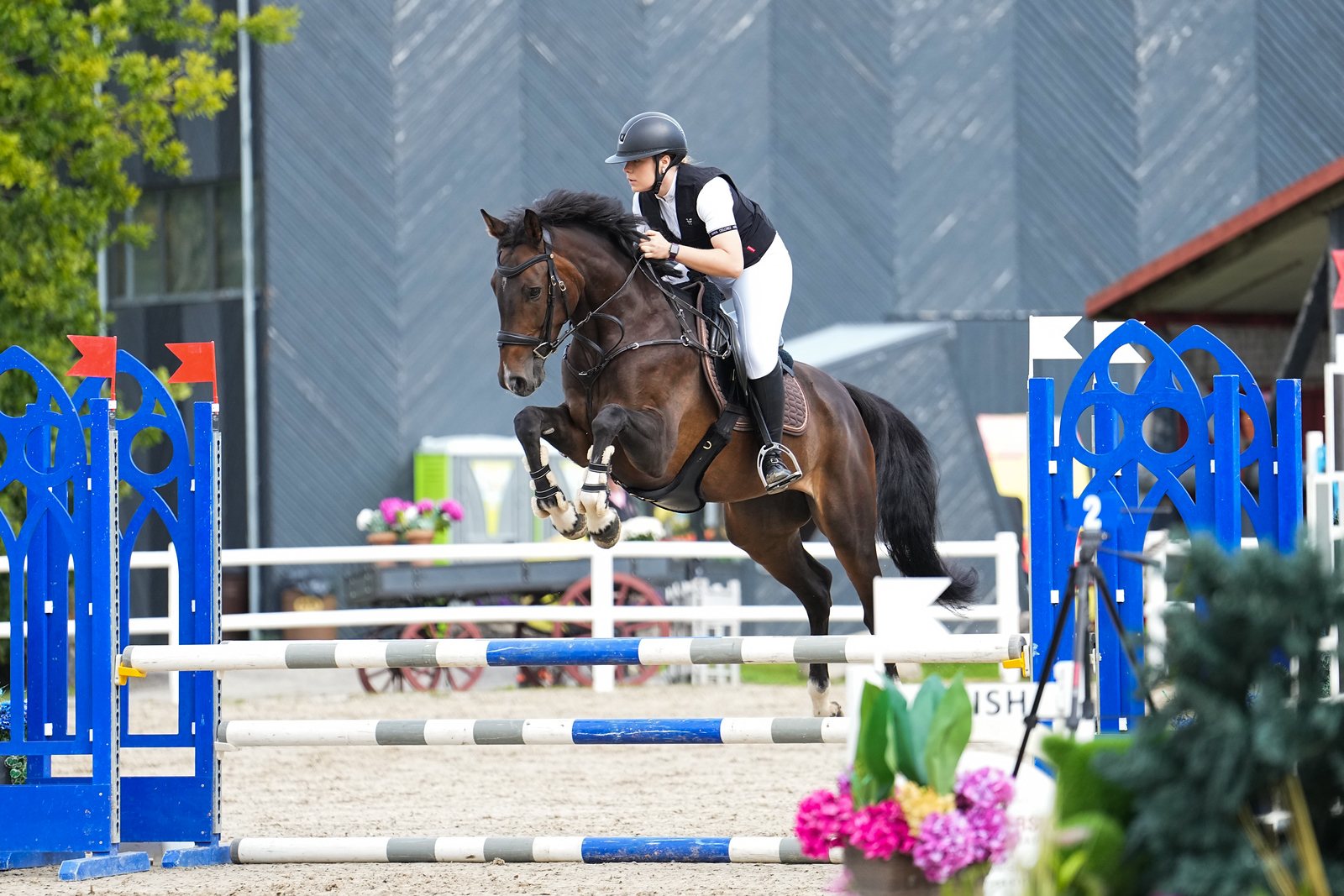
If you are an American buyer shopping for a jumper, the first question is always the same: how much does a jumping horse cost? The honest answer has two parts. There is the price of the horse, almost always quoted in euros because the best horses are in Europe, and there is everything it takes to land that horse on your soil and keep it. This guide puts real 2026 numbers on both, in US dollars, so you can budget the whole purchase rather than just the sticker price.
We work on the buyer’s side, so we see what American buyers actually pay, all in. Here is the realistic picture.
En esta guía
- Why the price is quoted in euros
- Showjumper prices by level, in US dollars
- Qué mueve de verdad el precio
- Add the import: the real landed cost
- Price by age: young prospect, made horse or schoolmaster
- The cost after you buy: owning a showjumper in the US
- How to budget all-in as a US buyer
- Where US buyers overpay, and where the value is
- How the euro to dollar rate changes your number
- A worked example for a US buyer
- Preguntas frecuentes
Why the price is quoted in euros
Germany, the Netherlands, Belgium and France produce the deepest supply of quality showjumpers in the world, so most serious horses are priced in euros. For a US buyer that means two things. First, the exchange rate matters: a horse advertised at 100,000 euros is roughly 110,000 dollars when the euro sits near 1.10, and that number moves with the currency. Second, the euro price is only the start, because the horse still has to be vetted, flown and quarantined before it reaches you. Treat the euro sticker as the floor, not the final cost.
Showjumper prices by level, in US dollars
Nuestra comparativa detallada de guía de precios por nivel sets the European brackets in euros. Converted to dollars at roughly 1.1 per euro, the 2026 ranges look like this. Treat them as orientation, not a price list, because the individual horse and the time of year move the number.
| Tipo de caballo | Typical 2026 range (USD) |
|---|---|
| Caballo joven, 4 a 5 años, sin contrastar | $17,000 to $66,000+ |
| 1.10m to 1.20m amateur ride | $22,000 to $55,000 |
| Confirmed 1.30m amateur horse | $44,000 to $132,000 |
| Caballo competitivo a 1,40 m | $110,000 to $385,000 |
| 1,45 m y Gran Premio | $330,000 to several million |
These are purchase prices only. For most amateur buyers, the sweet spot is a confirmed, honest horse in the 1.20m to 1.30m range, where a sound, rideable partner is realistic without reaching for six figures.
Qué mueve de verdad el precio
Two horses of the same height can sit thousands of dollars apart. The price reflects what the horse can do and how reliably it does it, not the height alone. The biggest drivers are the competition record, the age, the scope, and above all the rideability. A safe, scopey horse an amateur can actually ride is worth far more than a more talented horse that needs a professional. Bloodline plays a role too: a fashionable sire raises the asking price whether or not the individual inherited the talent, which is why we always judge the horse before we judge the papers. Our guide to líneas de sangre de salto explains where breeding moves the number and where it does not.
Add the import: the real landed cost
This is the part US buyers most often forget. On top of the purchase price, plan for the vetting, export blood work, a transatlantic flight, government quarantine on arrival, and ground transport at both ends. A gelding flying in a shared container typically lands for somewhere around 11,000 to 14,000 dollars on top of the purchase price, and a mare or stallion costs more because of the longer quarantine their sex requires. Our complete import guide breaks the numbers down. The practical takeaway is simple: a horse advertised at 50,000 euros is not a 50,000 dollar horse to you. It is closer to 55,000 dollars at the current rate, plus another 12,000 or so to get it home.
Price by age: young prospect, made horse or schoolmaster
Age changes the price as much as level does. A young prospect of four or five is cheaper because you are buying potential rather than a proven record, and the unknowns are real. A made horse of eight to twelve with a genuine record costs more because the talent is confirmed. A schoolmaster, an older horse that knows its job, is often the best value for a nervous or returning rider even though it will not move up the levels. We compare the trade-offs in our guide to buying a 5-year-old showjumper. For most amateurs buying at a distance, paying more for a confirmed horse is cheaper in the long run than buying potential that does not come good.
The cost after you buy: owning a showjumper in the US
The purchase is a one-time number. Ownership is a monthly one, and over a horse’s life with you it dwarfs the price you paid. In the United States, plan realistically for:
- Boarding: often 800 to 2,000 dollars a month for full care, far more in show regions like Wellington.
- Farrier: roughly 150 to 350 dollars every five to six weeks for a competition horse.
- Routine veterinary and dental care, plus the maintenance an athlete needs.
- Insurance: mortality and major medical, usually a few percent of the horse’s value per year.
- Training and showing: lessons, entries, hauling and stabling, which add up fast on the circuit.
Un caballo que puedes permitirte comprar pero no mantener bien es un caballo que no puedes permitirte. Fija un presupuesto mensual realista antes de fijar el de compra.
How to budget all-in as a US buyer
Work from the total, not the sticker. Add the euro price converted to dollars, the import, the first year of insurance, and a buffer for the inevitable surprises. A useful rule for an amateur is to leave the purchase budget low enough that the all-in landed cost, plus a year of keep, still sits comfortably inside what you can spend. The horse that fits your riding and your wallet at the same time is the one that makes you a better rider rather than a more anxious owner.
Where US buyers overpay, and where the value is
Buyers overpay in two predictable ways: chasing a fashionable pedigree on a horse they will only ride at 1.20m, and buying scope they cannot use. The value, almost always, is in a sound, honest, rideable horse a level or two below the flashiest option, bought from a less fashionable line with a genuine record. That horse costs less to buy, vets better, and keeps you confident. Spending the saved money on a thorough revisión veterinaria de precompra and good insurance protects the purchase far better than an extra zero on the price ever will.
How the euro to dollar rate changes your number
Because European horses are priced in euros, the exchange rate quietly sets part of your budget. When the euro sits near 1.10 dollars, a 100,000 euro horse is about 110,000 dollars. If the rate drifts to 1.15, the same horse costs you 5,000 dollars more without the seller changing a thing. You cannot control the currency, but you can plan for it. Build a small buffer into your budget for rate movement between agreeing the price and settling the payment, and do not stretch to the very top of your range on a horse priced in a foreign currency.
A worked example for a US buyer
Say you have set an all-in budget of 90,000 dollars for a confirmed 1.20m amateur horse. A suitable horse is advertised in Germany at 55,000 euros. At a rate near 1.10 that is about 60,500 dollars to buy. Add roughly 12,000 dollars to vet, fly and quarantine a gelding, and you are at about 72,500 dollars landed. That leaves a sensible cushion inside your 90,000 for insurance, the first months of board, and the surprises that always come. The same horse advertised at 70,000 euros would land closer to 89,000 dollars, leaving almost no buffer. Same level, very different fit for your budget. This is exactly why we work back from the all-in number rather than the sticker.
Preguntas frecuentes
How much does a jumping horse cost for a beginner or amateur? A confirmed, honest amateur horse at 1.10m to 1.30m typically runs from about 22,000 to 132,000 dollars to buy, before import and keep. Most amateurs are well served in the lower half of that range.
How much does it cost to import the horse to the USA? Plan for roughly 11,000 to 14,000 dollars on top of the purchase price for a gelding, more for a mare or stallion. See our import guide for the breakdown.
Why are European horses cheaper than US horses? Greater supply. Europe produces far more sport horses, so even after import the all-in cost is often lower than buying domestically, with more choice.
What is the cheapest type of showjumper to buy and import? A young or schoolmaster gelding. Geldings skip the long quarantine that mares and stallions need, so they are the cheapest to land.
Want a clear all-in number for your budget? Tell us your level and your spending limit, and we will source horses that fit once the import and keep are factored in, not just the sticker price. Cuéntanos qué buscas.
So, how much does a jumping horse cost? For a US buyer, think in three layers: the euro price converted to dollars, the import to get it home, and the monthly cost to keep it well. Budget all three from the start, buy the honest horse rather than the flashy one, and the number on the advert stops being a surprise and becomes a plan.
Deja una respuesta